
AR-10 Rifle in 2026: How to Choose the Right One for .308 Power, Hunting, and Range Use
April 21, 2026
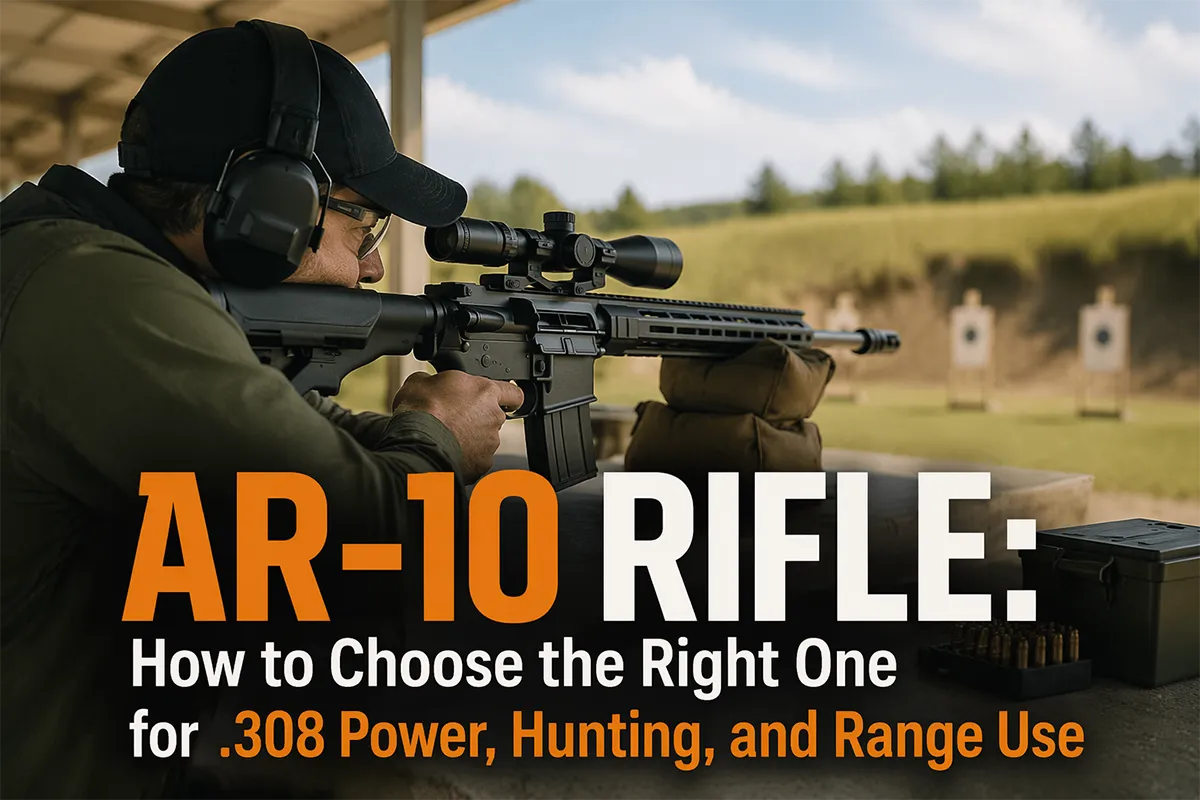
If you are researching an AR-10 rifle in 2026, you are usually trying to solve a more specific problem than “I want a bigger AR.” You want a semi-auto rifle that brings more reach, more energy, and more versatility than a standard 5.56 carbine, but you do not want to buy more weight, recoil, and cost than your actual use case requires. That makes this category appealing for hunters, range shooters, and buyers who want a .308-capable rifle that still feels familiar in layout and controls.
TL;DR: The best AR-10 rifle is usually the one that matches your real job, not the one with the most aggressive spec sheet. For most buyers, the smartest choice comes down to how much weight they are willing to carry, how far they actually plan to shoot, and whether they want a practical general-purpose .308 or a more specialized precision-leaning setup.
That distinction matters because the AR-10 space can get confusing fast. Some rifles are built to be lighter and handier, some lean toward hunting, and some are really precision-oriented large-frame gas guns wearing everyday-rifle clothing. On paper, they can all look like versions of the same idea. In practice, a light sixteen-inch .308 and a heavy premium twenty-inch rifle may share a silhouette while serving very different shooters. The goal here is to sort out those tradeoffs before the acronyms start breeding.
Why an AR-10 Rifle in 2026 Still Makes Sense
The appeal of an AR-10-style rifle is straightforward: it gives you semi-auto speed and familiar controls in a cartridge class that can do real work beyond what many smaller intermediate-caliber rifles are chosen for. That matters for buyers who want a practical hunting rifle, a range rifle with more authority at distance, or a general-purpose semi-auto that can bridge multiple roles without moving into a totally different manual of arms.
It is also one of the more realistic “do several things pretty well” rifle categories. A good AR-10 can cover hunting, bench or practical range shooting, and longer-distance recreational use in a way that feels flexible rather than narrow. That does not mean it is automatically the best answer for everyone. These rifles are usually heavier than AR-15s, recoil more, cost more to feed, and can vary more in overall size and feel. But for buyers who actually want .308-class performance in a semi-auto format, those tradeoffs are often worth it.
The mistake many buyers make is assuming the category is simple because the controls are familiar. In reality, this is one of those markets where small differences in barrel length, gas tuning, handguard length, stock setup, and total weight can dramatically change how the rifle feels. The good news is that once you define the role clearly, the shortlist gets much easier to build.
AR-10 Rifle in 2026: The Tradeoffs That Matter Most
The first tradeoff is weight versus shootability. A lighter AR-10 is easier to carry in the field and quicker to move, but a heavier rifle is often steadier and more comfortable during longer strings at the range. The second tradeoff is barrel length versus handiness. Shorter barrels tend to keep the rifle more manageable, while longer barrels usually make more sense for buyers who value stability and want to lean harder into precision or longer-distance use.
The third tradeoff is general-purpose setup versus precision bias. Some rifles are ideal for the buyer who wants one .308 semi-auto that can hunt, range, and train without fuss. Others are better for the shooter who already knows the rifle will live on a bipod or a bench more often than it rides in a truck or crosses a field. The fourth is price versus refinement. In this category, more money can buy better triggers, better barrels, better stock systems, and more tuning features—but it does not automatically buy a better fit for your needs.
That is why the smartest way to shop is not by asking “What is the best AR-10?” It is by asking “What kind of AR-10 do I actually need?” Those are very different questions, and the second one saves money more often.
Representative AR-10-Style Options at a Glance
| Platform | Action | Caliber | Barrel/Weight | Capacity | OAL | MSRP/Street |
| Ruger SFAR | Semi-auto | .308 Win. / 7.62 NATO family | Varies by SKU | Varies by SKU | Varies by SKU | Varies by SKU |
| SIG Sauer SIG716i Tread | Semi-auto | .308 Win. / 7.62 NATO family | Varies by SKU | Varies by SKU | Varies by SKU | Varies by SKU |
| DPMS LR-308 | Semi-auto | .308 Win. family | Varies by SKU | Varies by SKU | Varies by SKU | Varies by SKU |
| LWRC REPR MKII | Semi-auto | .308 Win. / 7.62 NATO family | Varies by SKU | Varies by SKU | Varies by SKU | Varies by SKU |
This kind of table is useful because it shows the category’s real shape. You are not just choosing between brand names. You are choosing between lighter rifles, more traditional full-size large-frame rifles, and premium setups that lean toward precision or high-end feature sets. Once you understand that, the category gets a lot less noisy.
How the Main AR-10 Paths Compare
A Ruger route, especially through the intended SFAR path, makes sense for buyers who want a more portable .308 semi-auto and do not want the rifle to feel like a bench gun every time they pick it up. This is often the most attractive lane for hunters and general-purpose buyers who like the idea of AR-10 power but still care a lot about weight and field handling.
A SIG Sauer option like the intended SIG716i Tread tends to appeal to the buyer who wants a modern, straightforward large-frame rifle that feels versatile rather than niche. This is often the practical middle path: enough rifle for serious range use and hunting, without necessarily tipping into premium-price territory or highly specialized precision features.
A DPMS pattern option like the intended LR-308 makes sense for buyers who want a familiar large-frame concept and are comfortable comparing variations carefully. This type of rifle often attracts people who value the broader AR-10-style ecosystem and want a platform that feels conventional in the category, whether for range time, general-use research, or future setup changes.
A premium path through LWRC, especially the intended REPR MKII, usually fits the buyer who already knows they want a more refined rifle with a stronger precision or high-performance tilt. This is the part of the category where you stop shopping for a general-purpose .308 and start deciding how much refinement, adjustability, and long-session comfort you really want.
Which AR-10 Setup Fits Your Use Case Best?
For hunting, a lighter and handier rifle usually makes the most sense. The reason is simple: a rifle that is pleasant to carry is more likely to be carried well. If your AR-10 will spend time in blinds, tree stands, or moving between field positions, keep total weight and balance near the top of your checklist. A rifle that feels great off a bench can become surprisingly educational after a long walk.
For range use, a heavier and more stable setup often becomes more attractive. Here, the extra weight can actually help. It can make the rifle steadier, easier to track, and more comfortable over extended sessions. This is where longer barrels, more supportive stocks, and more deliberate setup choices begin to pay off.
For general-purpose ownership, the middle ground wins more often than not. A sensible barrel length, a practical optic setup, and a rifle that is not too heavy and not too stripped-down will usually serve better than an extreme configuration. Most buyers are happier with a versatile rifle than with a rifle that is theoretically ideal for one narrow job they only do twice a year.
Research Checklist Before You Buy
- Decide whether your primary role is hunting, range use, or general-purpose ownership.
- Set a realistic weight limit before you compare features.
- Choose barrel length based on handling needs, not internet chest-thumping.
- Think about optic size and mounting height early, not after the rifle is already in hand.
- Be honest about ammunition cost and how much you will realistically practice.
- Compare candidates inside the broader Semi Auto Rifles category before locking into one brand.
- Prioritize a rifle that fits your intended use well over one that simply sounds impressive.
That last point matters because “more rifle” is not always “better rifle.” In this category, the best purchase is often the one that trims away unnecessary bulk, unnecessary cost, or unnecessary specialization while keeping the performance you will actually use.
Final Take
An AR-10 rifle still makes a strong case in 2026 because it offers familiar controls, semi-auto speed, and .308-class capability in one flexible platform. The trick is not to shop the category as one big pile of “large ARs.” Shop it as three smaller groups: lighter field rifles, balanced all-around rifles, and heavier precision-leaning rifles. Once you do that, the decision gets cleaner. Buy for the role first, then the weight, then the refinements. That order will usually lead you to a better rifle than shopping by brand loyalty alone.