
Winchester Super Match Ammunition: Load and Buyer Checks
August 27, 2026
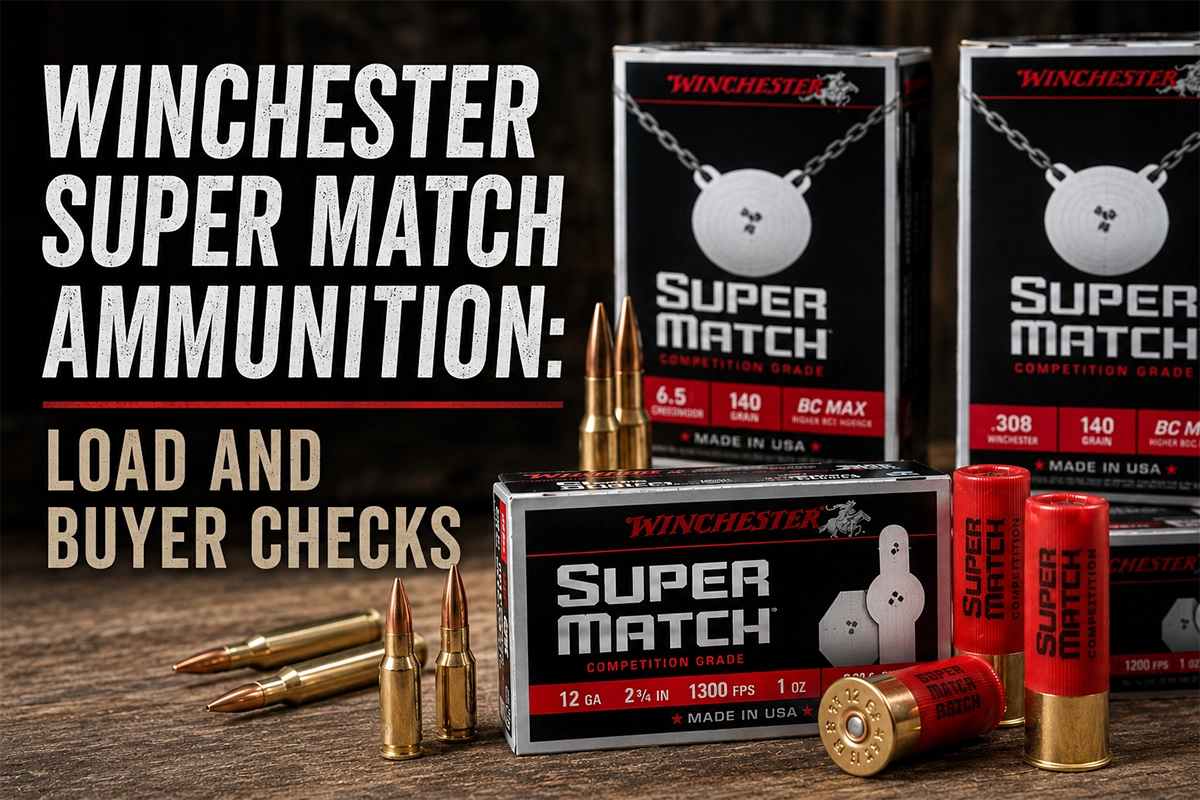
Winchester Super Match ammunition is a new competition-focused line covering centerfire pistol, centerfire rifle, and 12-gauge loads. Winchester announced the line on August 19, 2026. The useful question is not simply which box is newest. Buyers need to match caliber, projectile, power factor, firearm function, and match rules before choosing a load.
In short, Super Match gives competitors a broad factory-loaded menu. It includes common pistol weights, heavy-for-caliber rifle bullets, and three shotshell formats. That breadth is convenient, but each firearm still needs a function and accuracy test. A match label cannot tell you what your barrel, magazines, or sights will prefer.
What Is Winchester Super Match Ammunition?
Winchester describes Super Match as competition-ready, match-grade factory ammunition. The line serves action-pistol, dynamic-rifle, precision-rifle, clay, and practical-shotgun use. Product specifications below come from the official Winchester announcement. Independent lot-to-lot accuracy and velocity data were not broadly available at launch.
The centerfire pistol loads use round-nose or flat-nose bullets. Winchester says its high-sensitivity primers are intended to work with tuned competition guns. Rifle choices use boattail hollow-point (BTHP) or new BC Max polymer-tipped bullets. BTHP describes a streamlined bullet shape, while ballistic coefficient estimates how well a projectile resists drag.
Pistol Loads: Weight, Shape, and Power Factor
| Caliber | Bullet | Grain | Power Factor | Box |
|---|---|---|---|---|
| 9mm | Round nose | 115 or 124 | Minor | 50 |
| 9mm | Flat nose | 115 or 147 | Minor | 50 |
| .40 S&W | Flat nose | 180 | Major | 50 |
| .38 Super Auto +P | Flat nose | 130 | Major | 50 |
| .45 Auto | Round nose | 230 | Major | 50 |
Power factor is bullet weight multiplied by measured velocity, then divided by 1,000. Some match divisions use it for scoring. Winchester identifies each load as Minor or Major, but the label does not replace a chronograph check. Temperature, barrel length, and lot variation can change the velocity recorded from your pistol.
Round-nose bullets usually offer a familiar feeding profile. Flat-nose bullets cut a different hole in paper and may suit a preferred accuracy setup. Either style should be tested through the exact magazines used at a match. Researchers comparing suitable platforms can browse GunGenius semi-auto pistols before narrowing the load choice.
Bullet weight also changes recoil feel and sight timing. A 147-grain 9mm load often feels different from a 115-grain load even when both make Minor. That does not make one universally softer or faster. Spring rate, slide mass, compensators, and the shooter’s grip all affect the result.
Factory Competition Ammo Versus Practice Ammo
Winchester Super Match ammunition is positioned for scored use, but competitors may still choose less costly ammunition for routine drills. The key is keeping recoil, point of impact, and firearm function close enough that practice transfers to the match. A cheaper load that cycles differently or prints far from the match zero can create false feedback.
Compare both loads side by side before mixing them into a training plan. Check point-of-impact shift at the normal zero distance. Pistol shooters should compare sight return and magazine function. Rifle shooters should record elevation changes, especially beyond short range. Shotgun competitors should compare patterns and slug zeroes. Save the premium lot for confirmation and matches if the results support that approach.
Rifle Loads: Dynamic Matches or Precision Work
| Caliber | Bullet | Grain | Likely Role | Box |
|---|---|---|---|---|
| .223 Rem. | BTHP | 69 | Dynamic rifle | 20 |
| 5.56 NATO | BTHP | 77 | Dynamic rifle | 20 |
| .308 Win. | BTHP or BC Max | 168 or 175 | Precision rifle | 20 |
| 7.62 NATO | BTHP | 175 | Precision rifle | 20 |
| 6.5 Creedmoor | BTHP or BC Max | 140 | Precision rifle | 20 |
| 6.5 PRC | BC Max | 140 | Long range | 20 |
| 6 ARC | BTHP | 107 | Precision or gas gun | 20 |
The .223 Remington and 5.56 NATO choices target 3-gun and related dynamic events. Confirm the chamber marking before use because cartridge names are not an invitation to assume interchangeability. Magazine length, barrel twist, and gas-system function also deserve checks. Heavy bullets may need an appropriate twist rate for stable flight.
Precision buyers have more variables. The 168- and 175-grain .308 loads may produce different elevation, wind response, and group size. The same principle applies to the two 140-grain 6.5 Creedmoor options. BTHP versus BC Max is a useful test question, not an automatic verdict.
Start with three or more careful groups from a supported position. Record group size, velocity if available, and any pressure or function concerns. Then confirm the chosen lot at the match distance. GunGenius rifle listings can help researchers compare chamberings and configurations.
Shotshell Loads: Clays, Buckshot, and Slugs
| Gauge | Payload | Velocity | Box | Intended Use |
|---|---|---|---|---|
| 12 gauge | 1 1/8 oz. No. 7.5 | 1,235 fps | 25 | Clays |
| 12 gauge | Nine-pellet 00 buck | 1,300 fps | 25 | Practical shotgun |
| 12 gauge | 1 oz. rifled slug | 1,300 fps | 10 | Practical shotgun |
The shotshell range covers very different target problems. No. 7.5 shot fits clay stages, while buckshot and slugs address practical matches that require those projectiles. Winchester uses thick-walled hulls and high-brass heads. The company says that design helps shells retain shape in box-magazine-fed shotguns.
Patterning remains essential. A shotgun can place buckshot or birdshot differently when the choke, distance, or lot changes. Slugs need a separate zero check. Match rules may also restrict pellet size, velocity, or ammunition type, so read the current rulebook before ordering a case.
How to Test Competition Ammunition
- Confirm the exact caliber or gauge on the firearm and ammunition box.
- Read the current match and division rules, including power-factor requirements.
- Buy a small quantity from one lot before committing to case volume.
- Test feeding, extraction, ignition, and magazine function with your match equipment.
- Measure groups or patterns at realistic distances.
- Chronograph loads when scoring depends on velocity.
- Confirm the zero and keep the lot number with your notes.
A short test plan costs less than discovering a mismatch on match morning. Use the same firearm, magazines, optic, and support gear planned for competition. Stop if the ammunition shows unusual pressure signs, damaged cases, repeated failures, or another safety concern. Ask the firearm or ammunition maker for guidance when specifications are unclear.
What to Check Before Buying Winchester Super Match
- Exact SKU: Several calibers offer more than one bullet weight or shape.
- Division fit: Confirm Minor or Major scoring requirements with the applicable rules.
- Firearm fit: Check chambering, twist rate, magazines, and manufacturer guidance.
- Lot availability: Competition zeroes and velocity data are easiest to manage with consistent lots.
- Total cost: Compare delivered price per round, not only box price.
- Claims versus results: Treat factory descriptions as a starting point until your own firearm confirms them.
The broad line is the main appeal. One family now covers many common pistol, rifle, and shotgun disciplines. That may simplify research for competitors who prefer factory ammunition. It does not eliminate platform-specific testing, and launch specifications do not yet prove performance across many independent firearms.
Use the Winchester brand page to compare related catalog entries. Pay close attention to the product symbol when listings use similar box art. For the best decision, choose the Super Match load that meets the rules and performs consistently in your actual match setup.
Availability, Lot Numbers, and Case Purchases
Winchester said the line was available through dealers nationwide and online at launch. Actual inventory can vary by caliber and region. New products also may reach sellers in stages. Confirm that a listing shows the intended symbol, bullet weight, bullet shape, box count, and power-factor designation rather than relying on a shortened title.
Keep the lot number from every successful test. If Winchester Super Match ammunition meets the required accuracy and function standard, buying enough of the same lot may reduce another round of testing. Storage still matters. Keep cartridges dry, cool, and protected in their original marked packaging.
A factory match label narrows the search. Your firearm and match rules make the final decision.