
Remington Performance Wheelgun 22 LR: Buyer Checks
July 8, 2026
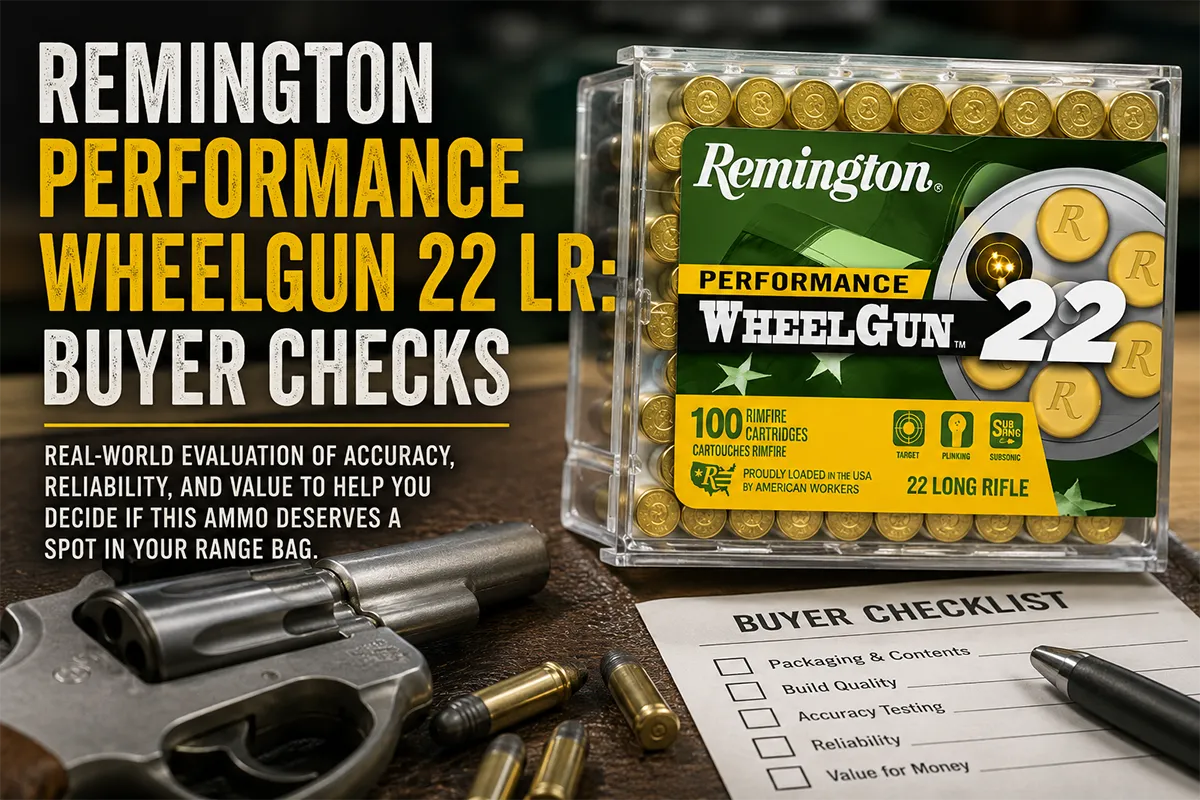
Remington Performance Wheelgun 22 LR is a new rimfire load aimed at shooters who spend time with classic six-shooters and modern .22 revolvers. Remington announced dealer availability on June 23, 2026, and the idea is simple: a mild, quiet, revolver-ready cartridge for target practice, plinking, and slow-fire accuracy work.
This is not a hunting load or a defensive load. It is a 39-grain truncated cone solid at 770 fps, packed in 100-count boxes, with an MSRP of $12.99. For GunGenius readers comparing rimfire revolvers, the question is not just whether the spec sheet looks good. The better question is whether this load matches the revolver, the range, and the way you actually shoot.
What Remington Performance Wheelgun 22 LR Is Built To Do
Remington built this load around low noise, light recoil, and reliable performance in revolvers. A semi-auto .22 pistol has to cycle a slide. A revolver does not. That lets a revolver-focused rimfire load prioritize soft report and steady point of aim over the higher velocity often used to run blowback pistols.
The truncated cone solid bullet also gives the cartridge a different profile from many round-nose .22 LR loads. In a revolver, feeding is not the issue the way it can be in a magazine-fed pistol. The useful checks are cylinder fit, clean loading, point of impact, extraction, and consistency across your preferred distance.
Remington’s product listing for Performance Wheelgun 22 identifies part number R21075, a 39-grain bullet, 770 fps muzzle velocity, and a 100-round package. Those numbers put it in the quiet, easy-shooting side of the .22 LR world.
Key Specs To Compare
| Caliber | Bullet | Grain | Velocity | Energy | Case | MSRP |
|---|---|---|---|---|---|---|
| 22 LR | Truncated cone solid | 39 grain | 770 fps | 51 ft-lbs at muzzle | Rimfire | $12.99 per 100 |
The key tradeoff is velocity. At 770 fps, this load is subsonic and should have a softer report than high-velocity .22 LR. That can make long practice sessions more pleasant, especially with small-frame revolvers, older six-guns, and indoor lanes where every bit of blast matters.
Lower velocity also means a more arched trajectory and less downrange energy. That is not a flaw if the goal is casual target work. It does mean you should not judge this load by the same standards as small-game hollow points, high-velocity bulk loads, or match ammunition made for rifles.
Who Should Research This Rimfire Revolver Ammunition?
The best fit is the shooter who owns a .22 revolver and wants a calm, predictable practice round. That could mean a single-action plinker, a compact double-action trainer, or a modern rimfire handgun used for low-cost fundamentals. The load also has appeal for owners who enjoy traditional wheelguns and want ammunition marketed for that exact use.
New shooters may benefit from the mild recoil and lower noise. Experienced shooters may value the ability to watch sights through the shot and call hits without fighting extra blast. Collectors with older rimfire revolvers should still verify ammunition guidance in the firearm manual or with a qualified gunsmith before using any new load.
If your main rimfire handgun is a semi-auto pistol, be more cautious. A soft .22 LR load may not cycle every semi-auto action. In that case, compare this cartridge with standard velocity and high-velocity loads in the same gun before buying deep.
Buyer Checks Before You Stock Up
- Confirm your revolver is chambered for .22 LR, not only .22 Short or another rimfire chambering.
- Inspect how easily cartridges seat in each chamber before range use.
- Compare point of impact at your normal distance, such as 7, 15, or 25 yards.
- Check extraction after several cylinders, since fouling can build in rimfire chambers.
- Record group size against your usual practice load.
- Buy a small quantity first, then decide whether it fits your revolver.
That checklist matters because .22 LR firearms can be selective. Two revolvers from the same maker may prefer different loads. A load that feels excellent in a full-size target revolver may print low in a short-barrel pocket revolver because the sights were regulated around a different velocity.
Packaging is another practical detail. A 100-count box is convenient for range trips, but it is still smart to test one or two boxes before treating any rimfire load as a bulk purchase. Rimfire ammunition is inexpensive compared with centerfire ammo, but poor fit wastes time faster than it saves money.
Quick Fit Notes
Start with distance. At 7 yards, this load should feel soft and easy to track. At 25 yards, watch whether your sights print high or low. A slow load can change point of impact in a noticeable way.
Noise is part of the appeal. It is still real ammunition and requires normal eye and ear protection. The point is comfort, not silence. Keep that expectation clear before you compare it with bulk high-velocity loads.
Keep cleaning in the plan. Rimfire loads can leave residue. If extraction gets sticky, stop and clean before judging accuracy. This is especially true with older revolvers that already have tight chambers.
Price also matters. The MSRP puts it near premium practice ammo, not bargain bulk. That makes testing before bulk buying even more useful.
How It Compares With Other .22 LR Loads
Bulk high-velocity .22 LR is often cheaper per round and widely available. It may shoot flatter and hit a little harder. The tradeoff is more noise, more blast, and sometimes less consistency. For casual steel or paper targets, that may not matter. For deliberate revolver practice, softer can be better.
Match ammunition is a different comparison. Match loads are built for tight groups, often from rifles or precision pistols. Remington Performance Wheelgun 22 LR is better viewed as a revolver-specific practice load. If your goal is tiny groups from a bench, test it, but do not assume it replaces match ammo.
Standard velocity lead round nose loads sit in the middle. They can be quiet, accurate, and affordable. The Remington load tries to stand apart by combining a truncated cone solid bullet with a product position aimed directly at wheelgun users. That focus is the main reason it deserves a separate look.
GunGenius Research Fit
GunGenius does not sell ammunition directly, but it can help you compare the handguns that make this load relevant. Start with the revolver category, then compare brands, barrel lengths, sight setups, and frame sizes. The Remington brand page is also useful when you want to keep ammunition and firearm research organized around a known maker.
Use this load as one data point in a broader rimfire setup. If you are choosing a trainer, a field plinker, or a classic-style six-shooter, the ammunition should support the firearm’s purpose. Quiet practice, clean handling, and predictable hits are useful goals. Raw speed is not always the deciding factor.
For revolver owners, the right .22 LR load is the one that seats cleanly, extracts easily, groups well, and keeps practice comfortable.
Bottom Line
Remington Performance Wheelgun 22 LR makes sense for shooters who want a mild, subsonic .22 LR load built around revolver use. The 39-grain truncated cone solid bullet, 770 fps velocity, and 100-count box all point toward affordable target sessions rather than hunting or defensive use.
The smartest move is to treat it like any rimfire load: test it in your own revolver before buying in quantity. If it loads smoothly, extracts cleanly, and prints where your sights look, it could be a useful practice option for rimfire wheelgun owners.