
Diamondback SDR-A Revolver: Lightweight .38 Special Deep Dive
May 19, 2026
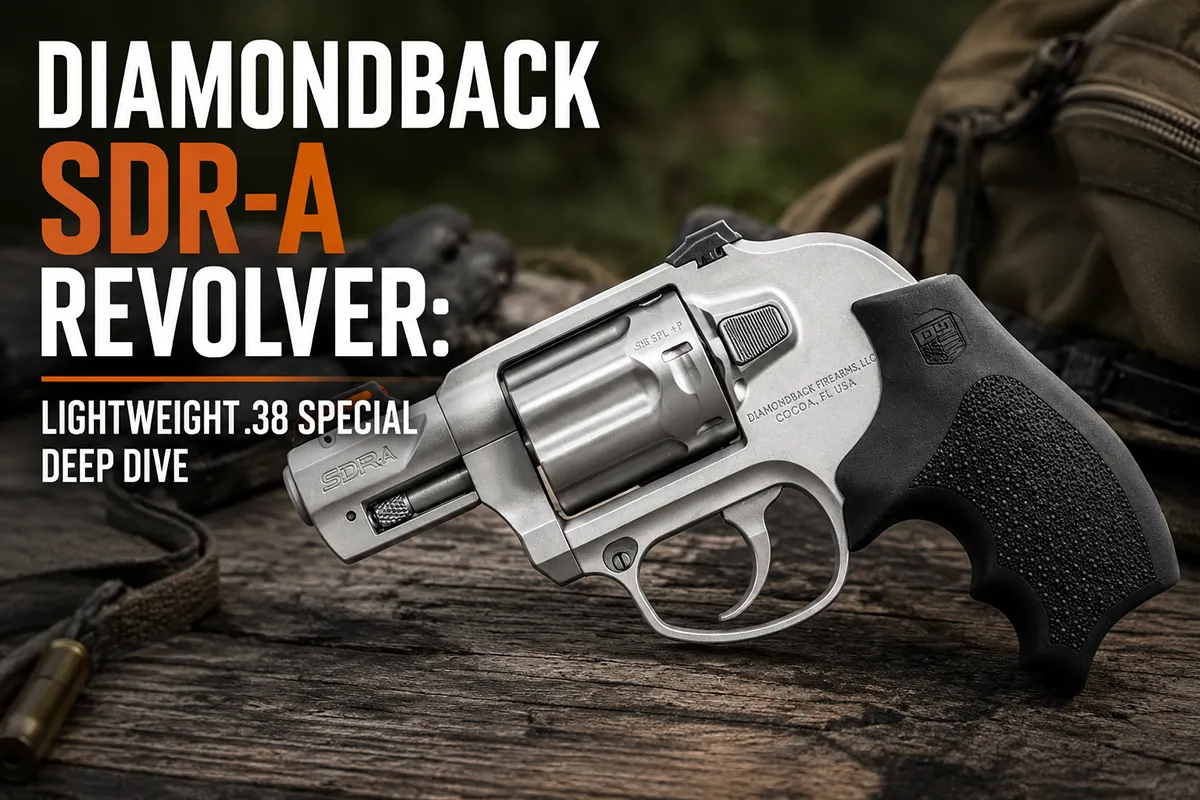
The Diamondback SDR-A revolver gives buyers a lighter take on Diamondback’s small defensive revolver line. It keeps the six-shot format that made the steel SDR interesting, but it swaps to an aluminum frame, a concealed hammer, and .38 Special +P chambering. For shoppers comparing modern snub nose revolvers, that mix creates a clear question: is less weight worth giving up .357 Magnum and single-action capability?
The short answer is yes for some users, but not all. The SDR-A makes the most sense for people who want a pocketable or belt-carried defensive revolver that stays simple, snag resistant, and easier to carry all day. It makes less sense for shooters who want regular .357 Magnum practice, a visible hammer, or the softer recoil of a heavier steel frame.
What the Diamondback SDR-A Revolver Changes
The standard SDR line already stood out because it put six rounds into a compact defensive wheelgun format. The SDR-A keeps that capacity but moves to a forged 7075-T6 aluminum frame. The barrel, cylinder, and major lockwork parts remain steel. According to American Rifleman’s launch coverage, the result is a listed weight of 15.6 ounces and an MSRP of $614.
That weight puts the SDR-A closer to airweight carry revolvers than to all-steel snubs. It also narrows the price gap between Diamondback’s premium-looking SDR family and more traditional small-frame options. The main tradeoff is caliber. Diamondback rates the SDR-A for .38 Special +P, not .357 Magnum. That is a reasonable choice for a light gun, because magnum recoil in a small revolver can be sharp enough to slow practice and follow-up shots.
| Model | Action | Caliber | Barrel/Weight | Capacity | OAL | MSRP/Street |
|---|---|---|---|---|---|---|
| Diamondback SDR-A | DAO revolver | .38 Special +P | 2 in / 15.6 oz | 6 rounds | 6.70 in | $614 MSRP |
| Steel Diamondback SDR | DA/SA or DAO variants | .357 Mag., .38 Spl., or 9mm variants | Varies by SKU / about 5 oz heavier | 6 rounds | Varies by SKU | Higher than SDR-A |
Why the Aluminum Frame Matters
Carry guns are judged every hour they are worn, not just during the first cylinder at the range. A 15.6-ounce revolver is easier to keep on the belt, in a coat pocket, or in an ankle rig than an all-steel snub. That matters for users who already like the simple manual of arms that comes with a double-action revolver.
The lighter frame also changes the shooting experience. Less mass means more felt recoil with the same ammunition. In practical terms, most shoppers should plan to test standard-pressure .38 Special for practice and a proven .38 Special +P load for defensive use, if local law and personal needs support that choice. The gun may be rated for +P, but rating and comfort are different questions.
This is where GunGenius research pages help. Start with the revolver category to compare small defensive revolvers by size, capacity, and chambering. Then check the Diamondback brand page to see how the SDR-A fits beside Diamondback’s other handguns and rifles.
Concealed Hammer, DAO Trigger, and Sights
The SDR-A uses a concealed hammer and a double-action-only trigger. That means every shot is fired with the same longer trigger stroke. There is no exposed hammer to cock, and there is no hammer spur to catch during the draw. For a small carry revolver, that design is practical. It favors consistency over range-bench precision.
Diamondback also gives the SDR-A fiber-optic sights. A bright front sight is useful on a defensive revolver because the sight radius is short and the gun is meant for close-range work. The rear sight is still low profile, so this is not trying to become a target revolver. It is trying to be visible enough without turning into a sharp-edged pocket problem.
The SDR-A is best understood as a carry-first revolver. Its strongest features are weight, capacity, and a draw-friendly shape.
Diamondback SDR-A Revolver Buyer Fit
The Diamondback SDR-A revolver is a better fit for some buyers than for others. It should appeal to people who already know they want a small revolver instead of a micro 9mm pistol. It should also interest shooters who want six rounds without moving to a larger belt gun.
- Best fit: experienced revolver users who want a lighter daily carry option.
- Good fit: buyers comparing J-frame-size guns but wanting six-shot capacity.
- Possible fit: new revolver owners who will commit to double-action practice.
- Poor fit: recoil-sensitive shooters who rarely train with small handguns.
- Poor fit: buyers who specifically want .357 Magnum capability.
A new shooter can learn on a lightweight DAO revolver, but it is rarely the easiest path. The long trigger pull rewards steady grip and careful trigger press. Those are useful skills, yet they take repetitions. If the gun is unpleasant with the ammunition a buyer plans to use, practice will suffer. That is the wrong trade for a defensive tool.
How It Compares to Steel SDR Models
The steel SDR remains the better research target if range comfort and caliber flexibility matter most. A heavier .357 Magnum revolver can fire .38 Special for lower-recoil practice, then step up to magnum loads when appropriate. It also gives shoppers more chambering options, including 9mm variants that use moon clips.
The SDR-A goes the other direction. It gives up that flexibility to become easier to carry. That is not a downgrade if the buyer’s real problem is weight. It is a focused answer to a common concealed-carry issue: the gun left at home because it is heavy enough to be annoying.
Common Buyer Questions
Two questions come up often. First, why choose .38 Special +P instead of 9mm? In a snub revolver, .38 Special avoids moon clips and keeps loading simple. Second, is six-shot capacity worth the added size over some five-shot revolvers? For many buyers, yes, but only if the grip and cylinder width still fit the holster and clothing they already use.
Also check parts and service support before buying any newer revolver design. Small revolvers depend on precise timing, a clean cylinder release, and a trigger that resets every time. Dry-fire handling at a dealer can reveal comfort issues, but live-fire testing is the better way to judge recoil and control.
Research Checklist Before You Buy
- Confirm the exact SKU, finish, and chambering before comparing prices.
- Handle the trigger in double action and decide if you can press it cleanly.
- Check holster support for your preferred carry method.
- Budget for practice ammunition and at least one defensive load test.
- Compare recoil against a heavier steel snub before choosing the lightest option.
- Verify local rules for purchase, transfer, carry, and ammunition use.
That last point matters because GunGenius content is informational, not legal advice. Revolvers may look simple, but state and local rules still govern purchase, possession, and carry. Buyers should check current official requirements before making a decision.
Bottom Line
The Diamondback SDR-A revolver is not trying to be a range toy or a magnum trail gun. It is a light, six-shot .38 Special +P carry revolver with modern sights, a concealed hammer, and a more approachable MSRP than the steel SDR models. That gives it a clear role.
Research it if you want a small revolver that is easier to carry than steel alternatives and you are comfortable training with a DAO trigger. Skip it if you want the softest shooting experience, the widest caliber range, or the option to thumb-cock a hammer for slow fire. In the current snub nose market, the SDR-A is interesting because it is specific. It solves the weight problem first.