
.22 LR Pistol in 2026: How to Choose the Right One for Training, Plinking, and Small-Game Utility
April 10, 2026
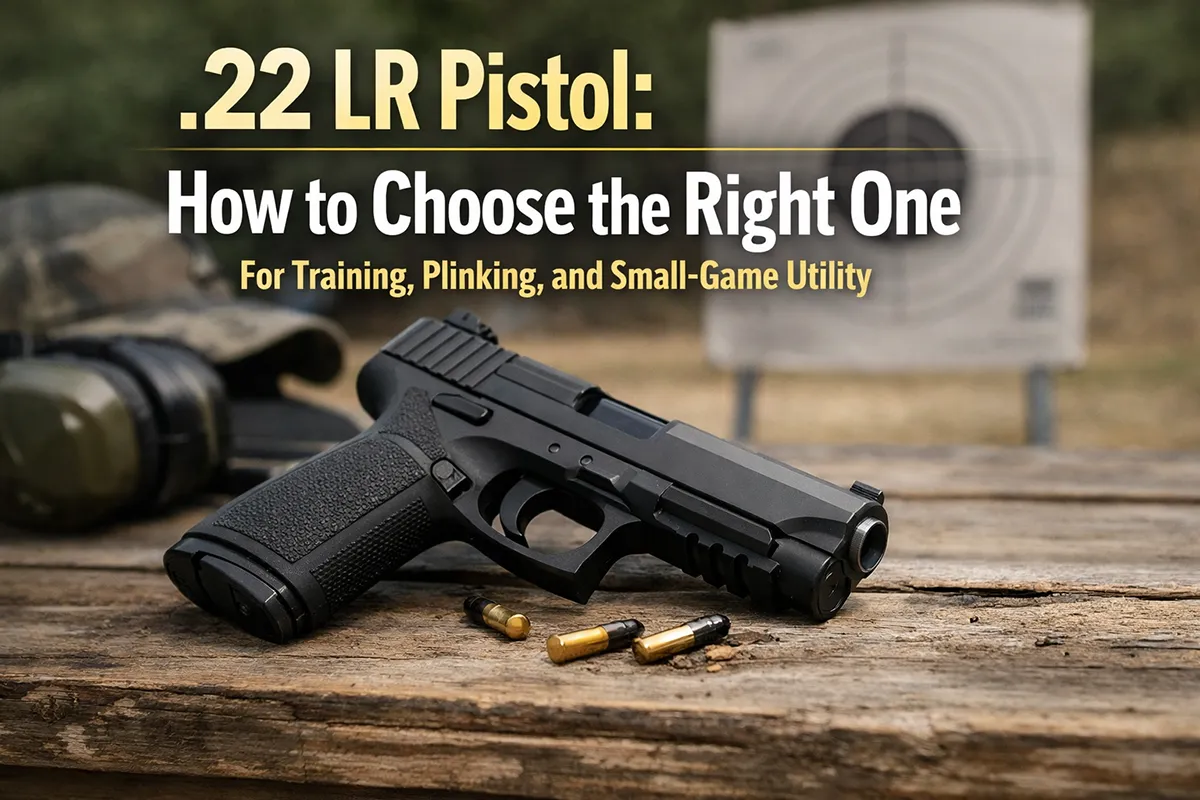
If you are researching a .22 LR pistol in 2026, you are usually trying to solve a practical problem rather than chase the loudest release of the month. You want a handgun that is affordable to shoot, easy to learn on, useful for practice, and still interesting enough that it will not become a safe ornament after two range trips. The good news is that the category is deep. The less-good news is that “deep” can also mean “annoyingly full of tradeoffs.”
A .22 LR pistol makes sense for several kinds of buyers. New shooters often want lighter recoil and lower ammunition cost. Experienced shooters often want a trainer for sight picture, trigger control, and draw-to-first-shot work. Field users may want a compact rimfire for pests or small-game tasks where legal. Collectors and tinkerers may simply want a platform with a long track record and broad aftermarket support. On April 8, 2026, the best choice still comes down to a few basics: reliability with common ammo, controls you actually like, the right barrel length for your use, and realistic expectations about what rimfire handguns do well.
Why a .22 LR Pistol Still Makes Sense
The biggest advantage is obvious: .22 Long Rifle is generally cheaper and easier to shoot than centerfire handgun ammunition. That matters because skill usually comes from repetition, and repetition gets expensive fast. A rimfire pistol lets you practice trigger press, sight alignment, reload habits, and basic gun handling at a lower running cost. It also tends to be more approachable for younger adults, recoil-sensitive shooters, or anyone who wants to build confidence before stepping up to a larger caliber.
That said, not every .22 pistol is trying to do the same job. A heavy, target-style pistol with a long sight radius is excellent for slow-fire accuracy and range fun, but it may feel bulky if you want a pack gun. A lighter polymer option may be easier to carry and easier to mount optics on, but sometimes it gives up a little of that classic steel-gun balance that target shooters like. This category rewards honest use-case thinking. Buying the wrong .22 pistol rarely ends in disaster, but it often ends in a second .22 pistol.
For a broader look at the category, start with the semi-auto pistols section on GunGenius.
.22 LR Pistol Spec Highlights and What Actually Matters
Spec sheets can make rimfire pistols look more different than they really are, so it helps to focus on the details that affect daily use. Barrel length influences sight radius, balance, and velocity, but the practical question is whether you want a compact trainer or a steadier target gun. Weight matters because heavier pistols usually feel calmer during firing and can be easier to shoot accurately, while lighter pistols are handier for field carry. Capacity matters mostly for range convenience. Threaded barrels, optics-ready tops, and rail space matter if you already know you want a suppressor host or red-dot setup.
| Model Family | Typical Strength | Tradeoff | Best Fit |
| Ruger Mark IV | Accuracy, aftermarket, easy takedown | Heavier feel on some versions | Range use, target work, long-term ownership |
| Browning Buck Mark | Good trigger feel, steady shooting manners | Configuration differences can matter a lot | Plinking, bench work, recreational accuracy |
| S&W Victory | Simple layout, solid value, accessory potential | Less iconic ecosystem than Mark IV | General-purpose training and customization |
| Taurus TX22 | Higher capacity, familiar controls, lighter build | More trainer-oriented than classic target-oriented | High-volume practice and casual range sessions |
The takeaway is simple. If you care most about classic range performance, the heavier metal-framed or target-leaning pistols usually rise to the top. If you want a training companion that feels a little closer to a modern defensive pistol, lighter polymer-framed options can make more sense. Neither path is wrong. They are just solving different problems.
Four Common Paths Buyers Take
- The dedicated trainer: You want low-cost reps, modern controls, and enough capacity that you spend more time shooting than loading magazines.
- The accuracy-first range pistol: You care more about trigger quality, sight radius, and steady balance than compactness.
- The field rimfire: You want a pistol that carries easily and does not feel like a small anchor on your belt or in your pack.
- The long-term tinkering platform: You want broad parts support, accessory options, and a design with a strong user base.
Most disappointment happens when buyers confuse these categories. A target pistol can feel awkward as a pack gun. A light trainer can feel less satisfying for tiny-group bench shooting. The smarter move is to decide which of those four roles matters most before comparing finishes, optic plates, or grip textures.
Comparing the Standouts
Ruger remains one of the easiest places to start because the Mark-series reputation is well established, and the Mark IV family is popular for a reason. Easy takedown is a real quality-of-life improvement, and many buyers like the broad aftermarket for grips, triggers, mounts, and upper configurations. If your goal is a .22 pistol you can grow with over time, this is still one of the safest research bets.
Browning offers a different kind of appeal with the Buck Mark line. These pistols often attract shooters who care about a good out-of-the-box feel and strong recreational accuracy. They tend to appeal to buyers who want a classic range companion rather than a rimfire that mimics a centerfire carry gun. If your sessions are mostly slow-fire or informal precision work, that matters.
Smith & Wesson fits the middle ground well with the Victory family. It is often viewed as a straightforward, practical choice: not trying too hard to be retro, not trying too hard to be futuristic. For buyers who want a solid base gun with room for barrels, sights, or other upgrades, it deserves a serious look. It is also one of the easier options for shoppers who want a traditional-feeling .22 without immediately entering the rabbit hole of endless variants.
Taurus pushed the category in a more trainer-friendly direction with the TX22 family. Higher capacity, lighter weight, and familiar controls are the big draws. This is often the choice for buyers who want a rimfire pistol that feels more like a modern centerfire handgun during handling and drills. It is not necessarily the first answer for every bullseye-minded shooter, but it can be a very practical answer for volume practice.
In plain English, the Ruger and Browning paths often lean a bit more “classic range pistol,” while the Taurus path often leans more “modern trainer,” and Smith & Wesson sits comfortably between those lanes. That is a simplification, but it is a useful one.
Reliability, Ammunition, and the Rimfire Reality Check
One thing new buyers should know: rimfire pistols are usually more ammunition-sensitive than centerfire pistols. That is not a flaw unique to one brand. It is part of the platform. Bullet shape, velocity, and overall cartridge consistency can all affect feeding and extraction. A pistol that runs brilliantly on one load may merely behave on another. Because of that, a fair evaluation means testing several loads before deciding that a pistol is “picky” or “perfect.”
Magazine quality and cleanliness also matter more than many buyers expect. A dirty rimfire can start acting like it suddenly forgot its job description. That does not mean you need obsessive maintenance. It means .22 pistols reward basic, regular upkeep more than some centerfire handguns do. If you hate cleaning, choose a design with easy takedown and a reputation for simple maintenance.
Optics, Suppressor Hosts, and Future-Proofing
If you think you might add a red dot later, check optics compatibility now instead of assuming every variant handles it the same way. The same goes for threaded barrels. Many buyers start with “I just want a cheap plinker” and end up wanting a rimfire host for a small optic or suppressor-ready setup. That is normal. A .22 pistol tends to become a project gun because it is fun, relatively affordable to shoot, and forgiving enough to invite experimentation.
Future-proofing does not always mean buying the most tactical-looking model. Sometimes it simply means choosing a platform with strong parts availability, common magazines, and enough variant support that upgrades are easy later. In that respect, established product families usually age better than niche one-offs.
Research Checklist Before You Buy
- Decide whether your main role is training, target shooting, field carry, or general plinking.
- Compare weight and barrel length before comparing cosmetic features.
- Check how easy the pistol is to field-strip and clean.
- Look at magazine cost and availability, not just pistol price.
- Confirm whether the exact SKU is optics-ready, threaded, or both.
- Plan to test more than one ammunition load before making a final judgment.
This checklist sounds basic because it is basic, and that is the point. The best .22 LR pistol purchase is usually the one built around your actual shooting habits instead of the one with the most impressive product photo.
What to Watch Next in the .22 LR Pistol Market
Going forward, the most interesting part of the .22 LR pistol category is not likely to be radical redesign. It is more likely to be refinement: better optics accommodation, more suppressor-ready configurations, broader accessory compatibility, and SKU expansion that targets specific uses. For buyers, that means the core decision probably will not change much over the next month or two. The proven names still matter most. What changes is how closely a specific trim fits your preferences.
If you are deciding today, the smart approach is to start with role, then platform style, then features. Buy a target-style .22 if you want steadier range performance. Buy a trainer-style .22 if you want repetition on modern controls. Either way, a good rimfire pistol can be one of the most useful handguns in a collection, because it makes practice easier to afford and easier to enjoy.