
Takedown Rifle in 2026: How to Choose the Right One for Camp Use, Small Game, and Compact Storage
April 9, 2026
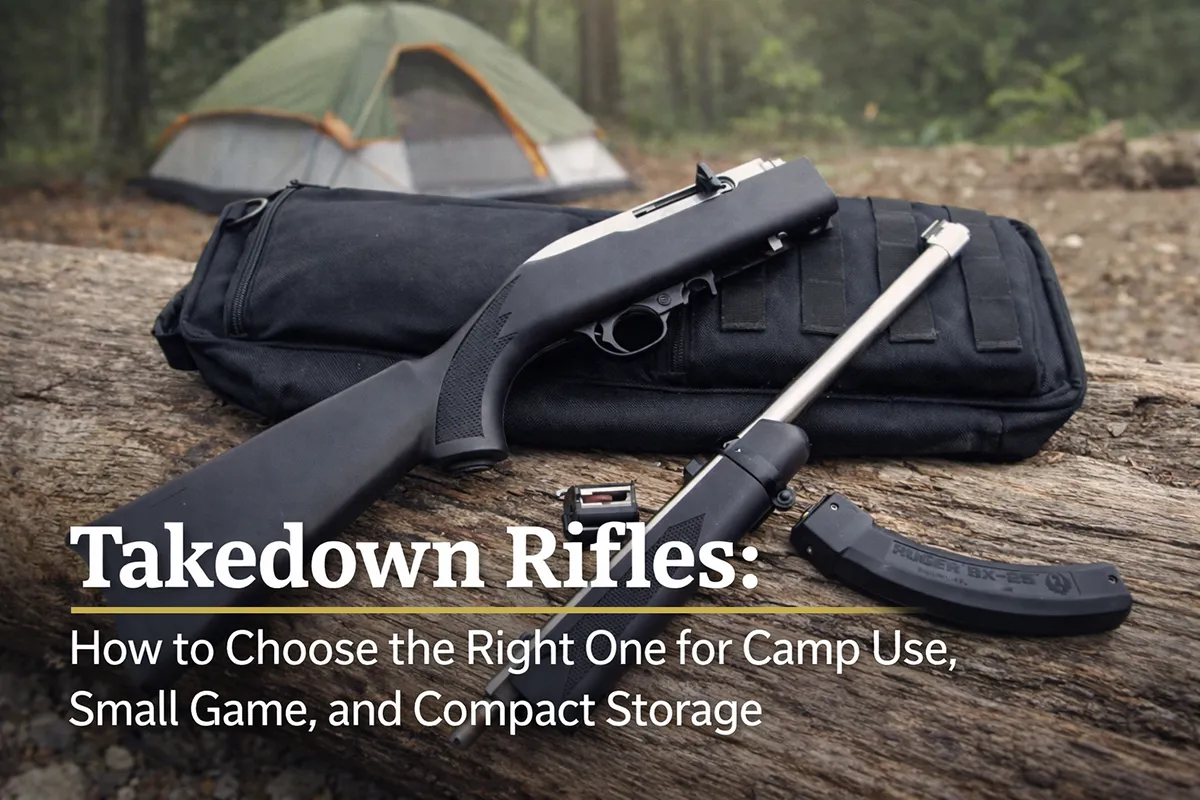
TL;DR: A takedown hunting, and general rimfire utility. The best choice usually comes down to one question: do you want maximum packability, maximum shootability, or the best middle ground between the two?
If you are researching a takedown rifle in 2026, you are probably trying to solve a very specific problem. You want a rifle that can disappear into a pack, truck compartment, cabin closet, or boat bag without becoming a chore to store, yet still feel like a real rifle when it is time to shoot. That makes this category more practical than it first sounds. A takedown design is not just about novelty. It is about portability with fewer compromises than many buyers expect.
At its simplest, a takedown rifle is a rifle that separates into major components for transport, usually barrel and forend from receiver and stock, or an upper assembly from a lower section. The point is not just shorter length in storage. The point is easier carrying, easier packing, and less awkward handling when the rifle is not in use. That makes this category especially relevant for campers, trappers, small-game hunters, rural property owners, and anyone who wants a low-drama utility rifle. Start with the broader other rifles category if you want to explore where these designs fit across the market.
Why a Takedown Rifle Still Matters
The biggest strength of a takedown rifle is obvious but still worth stating clearly: storage changes ownership. A rifle that fits into a smaller case or bag is easier to bring along, easier to keep organized, and more likely to be with you when you actually want it. That matters for camp chores, informal pest control where lawful, trail-side small-game use, and general recreational shooting. A rifle that stores neatly tends to get used more than one that feels like a hassle every time you move it.
The second strength is flexibility. Many takedown rifles are rimfires, especially .22 LR, and that is not a weakness. It is the category’s sweet spot. Rimfire ammunition is widely associated with lower recoil, lower noise, and long practice sessions that do not feel punishing. For a rifle meant to ride in a pack or stay ready for camp use, that makes sense. You are not usually asking this platform to be your everything rifle. You are asking it to be easy to live with.
The third strength is simplicity of purpose. Takedown rifles are rarely bought by accident. People shop them because they know exactly what they want: compact storage, quick assembly, and a rifle that can handle practical utility work without demanding a giant case, a permanent rack slot, or an entire spreadsheet of accessories. That focus is part of the appeal.
What Changes the Experience Most
The first big variable is assembly system. Some takedown rifles lock together with a simple twist-and-seat arrangement. Others use a more enclosed survival-style format designed around storage efficiency first. In real use, the question is not just how fast the rifle comes apart. It is how repeatable the fit feels when you put it back together. A takedown design should feel secure and predictable, not like a puzzle that gets slightly different every time.
The next major factor is sight and optic setup. If the sighting system stays on one half of the rifle, assembly consistency becomes less stressful. If your setup depends on parts aligning exactly the same way every time, you will want to pay extra attention to fit and return-to-zero behavior. For a casual camp rifle with iron sights, this may not matter much. For a scoped rimfire trainer or a small-game rig used at longer rimfire distances, it matters a great deal more.
Weight and stock design also shape the category. Ultra-compact survival-style rifles often win on packability but can feel less natural when shooting offhand for long sessions. More conventional takedown sporters usually shoot better and feel more familiar, but they take up more room once packed. This is the central tradeoff in the whole category: the smaller and more specialized the storage package, the more likely it is that shooting comfort gives up a little ground.
| Format | Typical Action | Common Calibers | What It Does Best | Main Tradeoff |
| Classic takedown rimfire | Semi-auto or autoloading | .22 LR | Balanced packability and shootability | Not as compact as survival-style designs |
| Survival-style rifle | Semi-auto | .22 LR | Very compact storage and travel friendliness | Usually less natural handling |
| Traditional takedown sporter | Semi-auto | .22 LR and similar rimfire options | Better feel, balance, and field carry | Longer packed size and less “stashable” storage |
How to Compare a Takedown Rifle
A practical way to compare this category is to think in three lanes. The first is the utility semi-auto takedown, where the goal is a normal-feeling rimfire that just happens to separate for storage. This lane appeals to buyers who want familiar ergonomics, better aftermarket options, and a rifle that still feels at home on the range. For that style, many shoppers start by browsing brands like Ruger, because the idea is usually “shootability first, compact storage second.”
The second lane is the survival rifle approach. Here, compact storage becomes the main event. These rifles are often light, clever, and highly portable, which is great for a pack, boat, or camp kit. The tradeoff is that they can feel more specialized once you are actually shooting them. This is where a brand like Henry often enters the conversation, especially for buyers who want true pack-gun behavior rather than a standard rimfire that merely comes apart.
The third lane is the traditional takedown sporting rifle. This approach usually favors better balance, cleaner lines, and a more classic feel in the hands. It may be less compact than a dedicated survival rifle, but it often feels more intuitive for small-game hunting and longer range sessions. That is one reason many buyers also compare options from Browning when they want something more refined than purely utilitarian.
The key is deciding which compromise you actually prefer. A lot of shoppers say they want the smallest possible package, then discover they care more about trigger feel, stock shape, or how easily the rifle settles on target. Others start out wanting a normal-feeling plinker, then realize that true compact storage is the whole reason they were shopping this category in the first place. Neither path is wrong. The mistake is not knowing which one is yours.
Where This Category Fits Best
Takedown rifles make the most sense for people who value convenience, portability, and low-stress ownership. Campers and overlanders like them because they pack more neatly. Small-game hunters like them because they are usually lightweight and easy to carry. Newer shooters often like them because rimfire takedown rifles can be approachable, low-recoil, and unintimidating. They also make sense for households where storage space is limited and a full-length case feels excessive.
Where they make a little less sense is in roles that demand maximum rigidity, maximum velocity, or a highly specialized optic setup. If your main goal is precision at longer distances, a conventional fixed-barrel rifle is often the easier answer. If your main goal is a hard-use centerfire general-purpose rifle, this category is usually not where you begin. Takedown rifles shine when portability is part of the mission, not just a bonus feature.
Research Checklist Before You Buy
- Check packed size first. A takedown rifle only earns its keep if the stored package really fits the bag, bin, or compartment you have in mind.
- Decide whether you care more about shooting feel or storage efficiency. That single choice usually points you toward the right design lane.
- Look at assembly repeatability. The rifle should lock together the same way every time without feeling loose or fiddly.
- Pay attention to sight placement. Iron sights may be perfectly fine, but optic mounting matters more on takedown designs than many buyers expect.
- Think about magazine storage and spare parts. Compact rifles are more useful when mags and small accessories are easy to keep together.
- Be honest about your shooting volume. A super-compact design can be clever, but a more conventional layout may be better if you plan to shoot often.
The Best Takedown Rifle Choice Is Usually the Simplest One
The smartest buyer in this category is usually the one who does not overcomplicate it. A takedown rifle is supposed to solve a practical problem, not create a new one. If you want a compact camp companion, favor portability. If you want a small-game and range rifle that happens to store neatly, favor shootability. If you want a long-term utility gun with broad familiarity and easier accessorizing, lean toward the most conventional-feeling option in the field.
That is why this category remains relevant in 2026. Not every rifle has to be optimized for distance, defensive roles, or endless accessory stacking. Sometimes the best rifle is the one that packs small, comes together quickly, and does exactly what you need without drama. For more ideas, keep browsing the other rifles category and compare what brands like Ruger, Henry, and Browning bring to the table.