
Savage Model 110 Trophy Series and AccuFit V2: Why Savage’s 2026 Refresh Matters
April 2, 2026
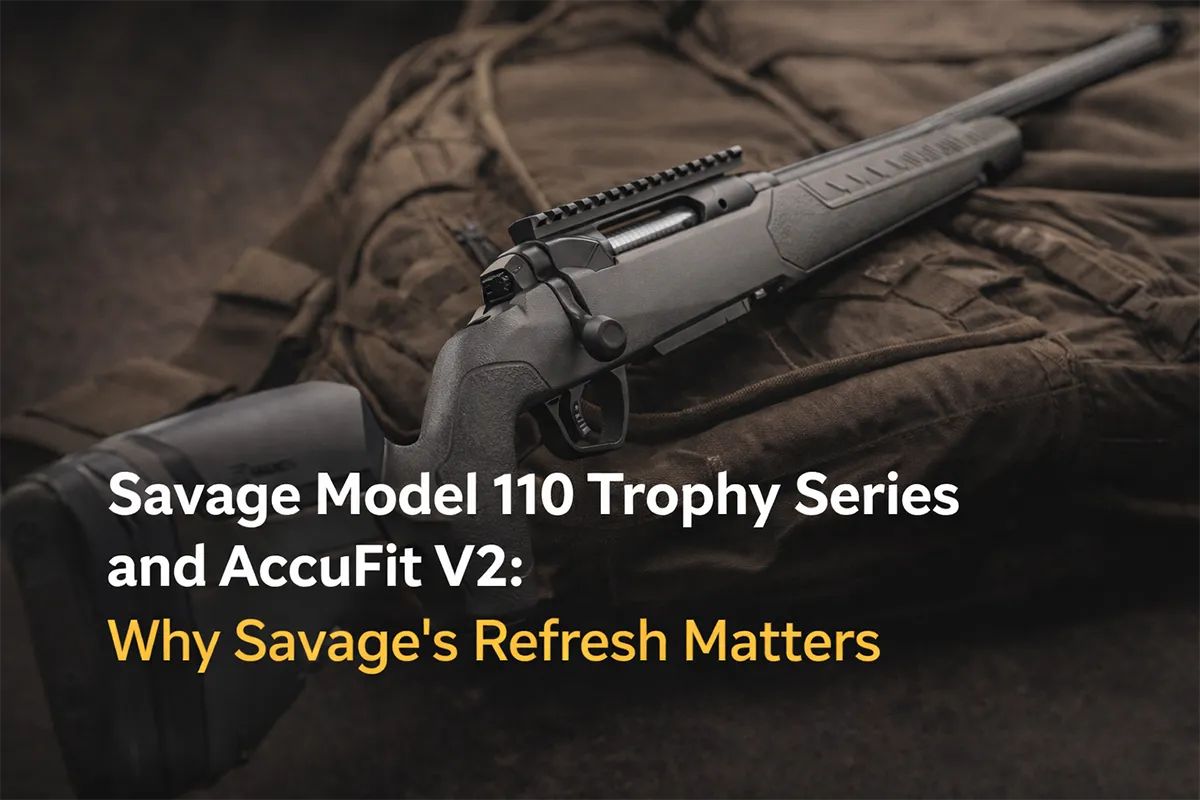
TL;DR: The Savage Model 110 Trophy Series and AccuFit V2 matter because Savage is not just adding another SKU or a cosmetic finish. It is trying to make rifle fit, stock adjustment, and practical field features more central to the 110 family in 2026, while still leaving room for budget-minded hunters who do not want to spend premium-rifle money just to get something useful.
On January 16, 2026, Savage announced the next generation of the Model 110 platform. Then, on February 10, it carved out the new Trophy Series as a four-rifle lineup built for “hardworking hunters.” By late February, Savage was also publishing breakdowns that clarified how Trophy, Core, and Pro models fit together. That sequence is what makes this launch more interesting than a routine product refresh. The company is not simply throwing out another bolt gun and hoping the catalog handles the rest. It is reorganizing one of its best-known rifle families around a clearer idea: better fit, better usability, broader chambering choices, and more obvious separation between entry, mid-tier, and premium hunting roles.
That gives the story a different tone from a pure spec-sheet launch. The Model 110 has been around long enough that Savage does not need to convince buyers the platform exists for a reason. The work in 2026 is about updating how it fits modern expectations. Hunters now expect threaded muzzles, more practical stock geometry, weather-resistant finishes, easier optic setups, and some version of stock adjustment without a half-hour garage session. Savage clearly got the memo.
Why the Savage Model 110 Trophy Series Matters
The Trophy Series matters because it shows where Savage thinks the practical center of the market is right now. This is the lower-priced, hunting-first side of the refreshed 110 family. It is not pretending to be a full custom rifle and it is not leaning too hard into match-rifle aesthetics. Instead, it emphasizes corrosion resistance, threaded barrels, improved stock ergonomics, and quicker length-of-pull adjustment. In other words, it is aimed at the buyer who wants a serious field rifle, not a social-media personality with a muzzle device problem.
The four-rifle Trophy lineup also feels intentionally useful rather than decorative. The Trail Blazer is the basic value-minded entry point. The Trail Blazer XP adds an included optic package for buyers who want a ready-to-hunt setup. The Ridge Hunter leans toward rough-weather and closer-cover hunting with stainless treatment and iron sights. The Carbon Hunter gives buyers a way into the carbon-barrel conversation without immediately jumping to the most expensive corner of the catalog. That spread makes sense because it maps directly to real shopping behavior. Some hunters want simple. Some want turnkey. Some want lighter weight. Some want big-game utility in bad weather. Savage is covering all of those lanes without making the line feel random.
The Real Story Is AccuFit V2, Not Just New Names
The bigger 2026 story is AccuFit V2. Savage is leaning hard into fit as a performance feature, not just a comfort bonus. That matters because many hunters still buy rifles based on caliber, finish, and price first, then wonder why the gun never quite settles naturally behind the optic. Proper rifle fit shapes cheek weld, eye alignment, shoulder position, recoil control, and how fast you find the sight picture when a shot appears with less warning than you would prefer.
AccuFit V2 is Savage’s more modern answer to that problem. On the broader refreshed 110 line, the system is built around toolless adjustments for length of pull and comb height, with some higher-end models also getting interchangeable grip modules. That is a meaningful shift because it brings custom-fit thinking closer to factory-rifle pricing and removes some of the friction that used to keep shooters from making adjustments at all. A feature does not help much if it lives in the manual and never on the rifle.
The Trophy Series uses a simpler version of that fit philosophy. It does not get the full stack of grip-module and comb-height options found on more advanced trims, but it does get the new Quick Set Dial approach to length-of-pull adjustment. That is a sensible compromise. Savage is basically saying that even its more accessible hunting rifles should fit better than “close enough,” while reserving the full adjustability package for buyers moving up into Core and Pro territory.
How Trophy, Core, and Pro Split the Lineup
This is where Savage’s refresh starts to look thoughtful instead of merely busy. The Trophy models are the affordable, field-ready hunting rifles. They keep the feature list practical and the price pressure under control. The Core series becomes the new middle ground, adding fuller AccuFit V2 adjustability, more customization potential, and features that appeal to hunters and crossover precision users who want more than the basics. The Pro series pushes farther into premium territory with more aggressive feature sets, higher-end materials, and stronger specialization.
That is a cleaner structure than simply offering a mountain of 110 variations and asking the buyer to decode everything from scratch. It also reflects a broader 2026 trend in bolt guns: manufacturers are not just releasing “a new rifle.” They are building families with clear steps from entry level to premium, usually anchored by adjustability, compatibility, and more weather-ready features. Savage’s version of that strategy feels especially practical because the company is using an established platform rather than inventing a new name for every trim level.
Which Trophy Models Look Most Useful Right Now?
The Trail Blazer is probably the easiest one to understand. It is the accessible entry point, and that makes it important even if it is not the flashiest. A lot of hunters want exactly this kind of rifle: threaded barrel, decent finish, straightforward stock, and broad chambering support without running the price upward just because the industry discovered carbon fiber and adjectives. It is the kind of rifle that can become a whitetail gun, a predator setup, or a general-purpose bolt rifle depending on the chambering.
The Trail Blazer XP is the practical upsell. Bundled optics are rarely glamorous, but they matter for buyers who want a cleaner path from store counter to range session to hunting season. A ready-to-hunt package makes sense for newer hunters, gift buyers, and anyone who does not want to spend another week cross-shopping ring height, optic budget, and mounting hardware.
The Ridge Hunter may be the most interesting field rifle in the Trophy group. Stainless treatment, iron sights, and a more compact, close-cover orientation give it a clear job instead of a vague personality. That is often a good sign. Rifles tend to get better when they know what they are for. For hunters dealing with wet weather, brush, and tougher big-game cartridges, the Ridge Hunter stands out as more than just a variant with a cooler name.
The Carbon Hunter rounds out the lineup by giving the series a lighter, more premium-feeling option without abandoning the Trophy identity. It will not replace the higher-end rifles above it, but it gives weight-conscious hunters a way into the modern carbon-barrel conversation at a lower rung on the price ladder.
What Buyers Should Watch Before Jumping In
The first question is how much adjustment you actually need. Savage’s 2026 messaging makes fit a major selling point, and that is fair, but buyers should still decide whether the Trophy stock’s simpler adjustment is enough or whether they should move into the more fully adjustable Core or Pro side. If your optic setup is straightforward and your body size is pretty average, Trophy may be all you need. If you are picky about comb height, grip shape, or plan to swap roles between field and range use, stepping up may be worth it.
The second question is whether you are buying for a specific hunt or for a general rifle role. The more defined your use case, the easier this lineup becomes. Thick-cover hunting, wet-weather big game, and a desire for backup iron sights point toward one path. A do-everything hunting rifle points toward another. A lightweight, feature-rich project base may point elsewhere. Clarity on the front end saves money on the back end, which is helpful because rifles have a remarkable ability to invite “small” purchases until your wallet starts making courtroom objections.
The third question is how this launch fits the broader market. Savage is not alone in pushing factory adjustability and stronger out-of-box utility. That is exactly why this refresh matters. The 110 line is not chasing a fringe idea here. It is trying to stay competitive in the part of the rifle market where modern buyers now expect better ergonomics, weather resistance, and simpler configuration right from the factory.
Research Checklist for the New Savage 110 Line
- Start with the role. Decide whether you want a general deer rifle, a rough-weather hunter, a lighter-weight setup, or a ready-to-hunt package.
- Be honest about stock fit. If rifle fit has been an issue before, the new 110 lineup deserves a closer look.
- Compare Trophy against Core. The price jump may be worth it if you care about full AccuFit V2 adjustability.
- Check chambering options first. Savage’s 2026 expansion gives buyers more choices, but the right rifle still starts with the right cartridge.
- Think beyond the announcement. Weight, optic setup, magazine pattern, and field conditions matter more than launch-week excitement.
- Browse the category before deciding. Comparing this launch against other bolt action rifles keeps the decision grounded.
What This Means for 2026 Rifle Buying
The best way to read Savage’s 2026 Model 110 refresh is not as one new rifle, but as a clearer thesis about what buyers now want from factory bolt guns. They want better fit without paying full custom money. They want weather resistance and threaded barrels without treating those as premium luxuries. They want lineups that make sense. And they want the option to spend more for refinement without being forced to spend more just to get a rifle that feels current.
That is why the Savage Model 110 Trophy Series and AccuFit V2 are worth covering. This is not the loudest rifle story of 2026, but it may be one of the more practical ones. It reflects where the mid-market hunting rifle is headed: less about novelty, more about fit, usability, and clean separation between trim levels. Browse more Savage rifles and the wider bolt-action category before narrowing your shortlist. This refresh looks strongest when you evaluate it as a system, not just as another model announcement.