
Single Action Revolver in 2026: How to Choose the Right One for Trail Carry, Range Use, and Western-Style Shooting
March 27, 2026
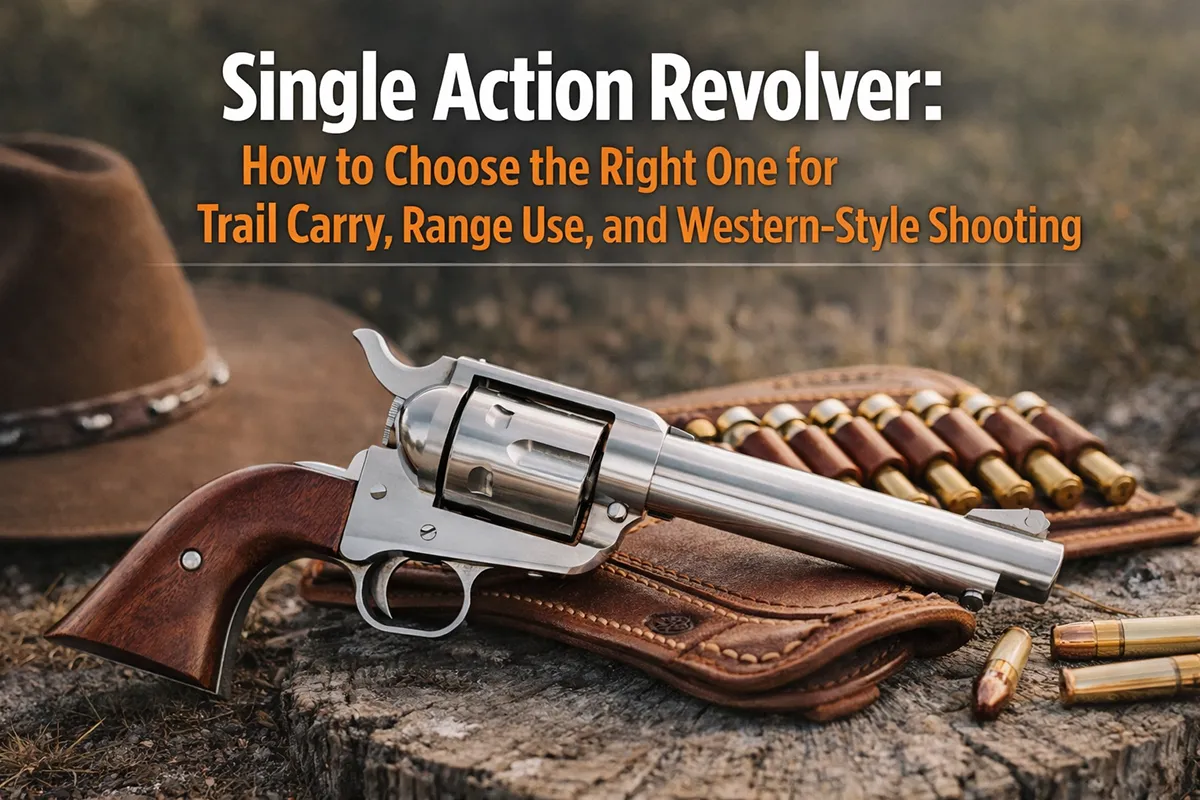
If you are researching a single action revolver in 2026, you are probably not looking for the newest tactical gadget with seventeen mounting points and a name that sounds like an energy drink. You are usually trying to answer a more grounded question: what kind of revolver makes sense for range use, trail carry, small-game use, or western-style shooting without becoming overly heavy, overly expensive, or overly complicated.
A single-action revolver is a revolver that requires the hammer to be manually cocked before each shot. That design is slower than a double-action revolver, but it also gives the shooter a crisp, predictable trigger feel and a simple manual of arms that many people enjoy. In plain English, it trades speed for control, mechanical simplicity, and a shooting experience that feels deliberate rather than hurried. That tradeoff still appeals to a lot of shooters for good reason.
The key is knowing what kind of single-action revolver you actually want. A rimfire plinker for inexpensive range time is one thing. A centerfire trail gun is another. A western-style revolver for collecting, casual shooting, or cowboy action competition research is something else again. Once you identify the job, barrel length, caliber, sights, and overall size become much easier to sort out.
For a broader category view, start with revolvers. If you are already narrowing by maker, comparing pages like Heritage, Ruger, Uberti, and Cimarron is usually the fastest way to see how budget, finish, caliber, and intended use split across the market.
Why a Single Action Revolver Still Makes Sense in 2026
The single-action revolver survives because it solves a few problems extremely well. It is easy to understand, often mechanically robust, and well suited to shooters who value a clean trigger press and a slower, more intentional shooting rhythm. That makes it a natural fit for plinking, small-game field use, range practice, and shooters who simply prefer traditional handguns over more modern designs.
There is also a practical side to this platform that sometimes gets lost behind the cowboy aesthetic. Many single-action revolvers carry well in the field, especially when matched to a sensible barrel length and caliber. They can be excellent trail companions when the goal is a durable sidearm for pests, informal target shooting, or general outdoors use. They also make a lot of sense for newer shooters who benefit from a simple, visible loading process and a slower pace that encourages attention to fundamentals.
That does not mean they are the right answer for every job. A single-action revolver is not built around rapid defensive shooting, and it is not trying to compete with a modern carry pistol. The smarter way to shop is to treat it as a specialized tool: great for range use, field carry, hunting in appropriate calibers, and traditional shooting roles, but not a one-size-fits-all handgun.
Choose the Caliber Before You Fall for the Finish
Caliber is the first big decision because it affects recoil, ammunition cost, noise, and what the revolver is actually useful for. Rimfire options like .22 LR and .22 WMR make a lot of sense for low-cost practice, casual plinking, and small-game roles. A .22 LR single action is usually the easiest entry point into the category because it is affordable to shoot and forgiving for new shooters. A .22 WMR adds more energy and a sharper report, which can be useful for field use, but it is still mostly a light-duty choice.
Centerfire choices are where the category opens up. .357 Magnum is one of the most practical all-around options because it offers real versatility, especially when the revolver can also use .38 Special for softer, cheaper practice. That combination makes a lot of sense for shooters who want one revolver for range time, trail carry, and general utility. .45 Colt is the traditional favorite for buyers who want the classic single-action experience, broader bullet weight options, and a cartridge closely associated with the platform. It carries more recoil and more cost than the smaller choices, but it also feels right at home in a western-pattern revolver.
Then there are heavier options like .44 Magnum. These can make sense for handgun hunters or outdoors users who want more power, but they are not automatically the best place to start. Heavier recoil can make practice less pleasant, and a revolver that is miserable to shoot tends to become a very expensive drawer ornament.
| Platform | Action | Caliber | Barrel/Weight | Capacity | OAL | MSRP/Street |
| Rimfire training revolver | Single action | .22 LR | Varies by SKU | Usually 6 rounds | Varies by SKU | Varies by SKU |
| Field rimfire revolver | Single action | .22 WMR | Varies by SKU | Usually 6 rounds | Varies by SKU | Varies by SKU |
| General-purpose centerfire revolver | Single action | .357 Mag. / .38 Spl. | Varies by SKU | Usually 6 rounds | Varies by SKU | Varies by SKU |
| Traditional large-bore revolver | Single action | .45 Colt | Varies by SKU | Usually 6 rounds | Varies by SKU | Varies by SKU |
The easy summary is this: choose .22 LR for inexpensive fun and training, .357 Magnum if you want the most flexible all-around option, and .45 Colt if you want a more traditional western-style revolver experience. Start with use, not romance. The finish can come later.
Barrel Length Changes the Revolver More Than You Think
Single-action revolvers often live in three barrel-length neighborhoods: shorter options around 4.75 inches, middle-ground choices around 5.5 inches, and longer variants around 7.5 inches. Each changes handling in a noticeable way.
A shorter barrel is easier to carry on the belt and generally handier for walking, hiking, and informal field use. It feels lighter and quicker, which can be appealing for trail carry or casual range sessions. A mid-length barrel often strikes the best balance between portability and shootability. It usually gives you a little more sight radius, a little more weight out front, and a steadier feel without becoming awkward on the hip.
Longer barrels make sense when accuracy at distance, sight radius, and a steadier hold matter more than portability. They can be excellent for deliberate range shooting and certain hunting roles, but they are undeniably less handy to carry. The best choice depends on whether this revolver will spend more time in a holster, on a bench, or in the field.
Fixed Sights or Adjustable Sights?
This is one of the most practical buying decisions in the category. Fixed sights preserve the traditional look and are common on classic western-pattern revolvers. They are simple, durable, and perfectly fine for many casual shooters. The downside is that they give you less flexibility if a particular load prints high, low, or off to one side.
Adjustable sights make more sense for shooters who expect to use different loads, want a more versatile range revolver, or care about dialing in point of impact more precisely. They are especially appealing on .22 and .357 models that may see a wider mix of ammunition. If function matters more than period-correct styling, adjustable sights are often the smarter choice.
In other words, fixed sights are great when you want a classic revolver and plan to keep things simple. Adjustable sights are better when you want a practical shooter first and a classic vibe second.
Brand Differences That Actually Matter
Heritage often makes sense for buyers who want an affordable rimfire entry point for plinking and casual use. Ruger tends to appeal to shooters who want a more hard-use feel, stronger overall reputation for utility, and options that stretch from rimfire fun to serious centerfire field use. Uberti and Cimarron are often where buyers look when the traditional western-style experience matters most, especially in finish, styling, and historical flavor.
That does not mean one brand is automatically “best.” It means the right brand depends on whether you care most about budget, rugged utility, classic styling, or a balance of all three. A buyer looking for a practical .22 plinker may land somewhere different from a buyer who wants a blued .45 Colt six-gun for western-style range use.
Research Checklist Before You Buy
- Decide on the job first. Trail gun, plinker, small-game revolver, and western-style range gun are not always the same purchase.
- Be honest about recoil tolerance. More power sounds impressive until practice stops being enjoyable.
- Choose sights based on use. Fixed sights for tradition, adjustable sights for flexibility.
- Think about carry comfort. Barrel length and overall weight matter much more once the revolver is actually on your belt.
- Budget for ammunition. A revolver that is affordable to buy but expensive to feed may get used less than expected.
- Handle the grip shape carefully. Single-action grip frames feel different from modern revolvers and pistols, and fit matters.
The Smartest Single Action Revolver for Most Buyers
For many shoppers, the smartest single action revolver is either a .22 LR model for inexpensive training and casual fun or a .357 Magnum model for broader range and field utility. Those two lanes cover a huge amount of what people actually do with these revolvers. A .45 Colt makes the most sense when the buyer specifically wants the classic big-bore western feel and accepts the added cost and recoil that come with it.
The best approach is to buy for the role, not just the look. Browse more revolvers, then compare makers like Heritage, Ruger, Uberti, and Cimarron before narrowing the field. A good single-action revolver should feel simple, shootable, and purposeful, not like a costume piece that wandered into your range bag.