
6.5 Creedmoor Bolt Action Rifle: How to Pick the Right One for Hunting and Range in 2026
February 16, 2026
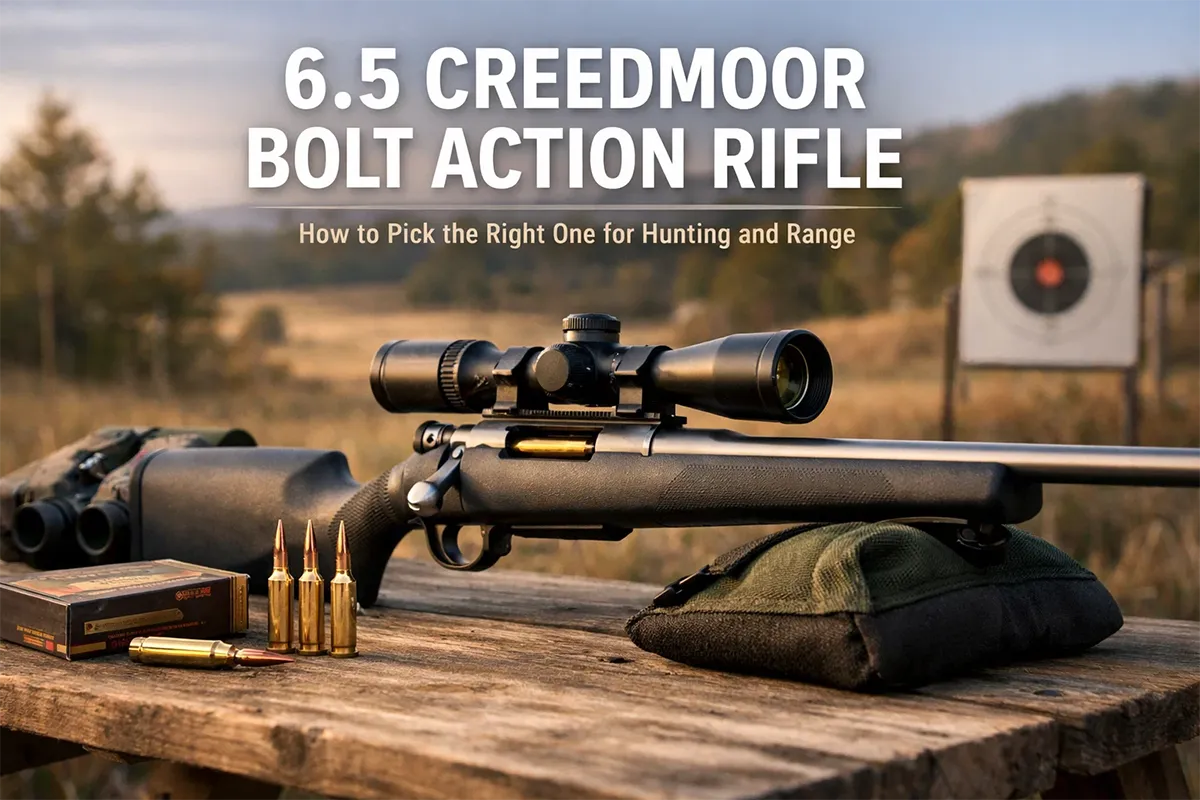
TL;DR: A 6.5 Creedmoor bolt action rifle is one of the easiest “do most things well” choices for whitetail-sized game and practical range work. The smartest pick comes down to how far you’ll realistically shoot, how you want the rifle to balance (light and handy vs steady and heavy), and how much you care about upgrade paths (stocks, triggers, magazines, and optics mounting).
6.5 Creedmoor isn’t magic, but it is forgiving: manageable recoil, good accuracy potential, and enough downrange performance for common hunting tasks when paired with the right bullet and responsible distances. The trap is buying a rifle that’s “technically fine” but annoys you every range trip—too light and whippy, too heavy to carry, a magazine system you can’t stand, or an optic mounting setup that limits your choices.
What you’re really choosing with a 6.5 Creedmoor bolt action rifle
Most modern bolt guns in 6.5 Creedmoor will shoot well enough to be “minute-of-deer” with decent ammo. So your decision is less about the cartridge and more about the rifle system:
- Weight & balance: Light rifles carry easily but tend to recoil sharper and wobble more from field positions. Heavier rifles are steadier and more comfortable for long range sessions.
- Barrel profile & length: Thin sporter barrels heat faster. Heavier barrels hold accuracy longer during strings of fire. Longer barrels can add velocity, but add length and weight.
- Magazine style: Internal box (simple), detachable flush mags (convenient), or AICS-pattern mags (common for upgrades and spares).
- Stock/chassis ergonomics: Comb height, length of pull, grip angle, and forend shape matter more than most people think.
- Optics mounting: A solid rail or common base footprint keeps your scope choices simple.
- Upgrade ecosystem: Some models have “infinite” aftermarket support; others are best left stock.
If you want to browse what’s out there first, start with the category page for bolt action rifles and then narrow down by caliber and intended use.
6.5 Creedmoor expectations: recoil, distance, and ethical use
For most adult shooters, 6.5 Creedmoor recoil is easier to manage than classic .30-caliber hunting rounds in similar rifle weights. That usually means more practice—and more practice is the real performance upgrade. Still, recoil depends heavily on rifle weight, buttpad, muzzle device, and how you shoot (bench recoil often feels “worse” than standing or prone with a bipod).
Distance is where people get sideways. 6.5 Creedmoor can stay accurate and stable at long range, but hunting at distance is about wind reading, consistent impact placement, and knowing your limits. A rifle that prints tight groups off a bench doesn’t automatically make long shots responsible. If your primary goal is hunting inside typical woods-and-fields distances, prioritize a rifle that carries well and mounts quickly—not a 12-pound bench machine.
Key specs that matter (and what to ignore)
Here are the specs that most directly affect how the rifle feels and performs for real users:
- Overall weight (bare and “ready”): Add scope, rings, sling, loaded magazine. A “7 lb rifle” can become a 9+ lb field setup fast.
- Barrel length: Commonly 20–24 inches. Shorter handles better; longer can add some velocity and soften the report a bit.
- Barrel contour: Sporter for carry; medium/heavy for lots of range time.
- Twist rate: Most modern 6.5 Creedmoor barrels handle the common bullet weights well. If you plan to use heavier, high-BC bullets, confirm the rifle’s twist supports them.
- Trigger quality: A crisp, predictable trigger helps practical accuracy more than a fancy finish.
- Magazine system: If you hate the mag, you’ll hate the rifle. It’s that simple.
Specs that tend to get overhyped: exotic coatings, “tactical” styling, and tiny differences in advertised velocity. Unless you’re chasing a specific competitive goal, comfort and repeatability matter more.
Quick comparison table: common 6.5 Creedmoor bolt-gun “types”
| Platform | Action | Best for | Typical weight | Barrel | Magazine | Notes |
| Light hunting rifle | Bolt | Carrying all day | Varies by SKU (often lighter) | Usually 20–22″ | Internal or detachable | Great to carry; can feel lively from the bench |
| General-purpose “crossover” | Bolt | Hunt + range | Varies by SKU (midweight) | Usually 22–24″ | Detachable common | Sweet spot for most buyers |
| Heavy/precision-oriented | Bolt | Range, positional shooting | Varies by SKU (heavier) | Usually 22–24″ heavier contour | AICS-style often | Steady and comfortable; less fun to carry far |
“Varies by SKU” is the honest answer because the same model name can come in multiple trims. Use the table to identify the type you want first, then shop the specific SKU that matches.
Three smart buying paths (with real-world tradeoffs)
Below are three common paths that tend to make people happy long-term. I’m naming popular examples so you can research efficiently, not because there’s only one “right” answer.
1) The “I want it to feel nice forever” crossover rifle
This is the buyer who wants a rifle that cycles smoothly, holds value, and doesn’t immediately trigger an upgrade itch. Two brands that often show up in this lane are Tikka and Bergara. Their crossover-style rifles are commonly chosen because they balance hunting carry with range comfort and usually have good out-of-the-box shootability.
What to watch: confirm the magazine style you’re getting (and the cost/availability of spares), and confirm your preferred optic mounting solution (rail vs bases) is straightforward.
2) The “value first, shoot a lot” practical starter
If your plan is to buy the rifle, mount a reasonable scope, and spend the rest of the budget on ammo and practice, value-driven bolt guns can be a smart move. Look at mainstream options from Ruger and Savage if you want lots of variants and broad parts/support. The goal here is simple: get a reliable rifle with a workable trigger and an ergonomic stock, then learn what you actually want to change after a few range trips.
What to watch: extremely light rifles can be harder to shoot well from field positions until your fundamentals are solid. If possible, choose a configuration that isn’t ultra-featherweight unless you truly prioritize carry comfort above all.
3) The “I might get serious about precision later” upgrade-friendly setup
If you think you’ll experiment with stocks/chassis, AICS-pattern magazines, or competition-style accessories, pick a rifle that plays nicely with common aftermarket parts. This often means choosing a model with a popular footprint and lots of third-party support. You don’t have to buy a full match rifle now—you just want to avoid buying something that’s a dead end.
What to watch: “upgrade-friendly” can become a money pit if you chase parts before you have a clear goal. Decide whether you want to build a hunting rifle that can stretch out, or a range rifle that can occasionally hunt. Those are different priorities.
Optics and mounting: the part most people under-think
For a 6.5 Creedmoor bolt gun, your scope choice should match your real distance and your real lighting conditions. A few practical guidelines:
- Hunting-focused: prioritize a clear sight picture and a forgiving eyebox over extreme magnification. If you hunt at dawn/dusk, glass quality matters.
- Range/crossover: moderate magnification with repeatable adjustments (turrets that track) and a reticle you can actually use for holds.
- Mounting: choose quality rings/bases, torque correctly, and confirm clearance (objective bell vs barrel, bolt handle clearance, and eye relief).
If you’re building a rifle that will see both field and range, don’t buy an optic that’s miserable to carry or slow to use in real hunting light. The best “spec” is the one you can apply under stress and time constraints.
Hunting setup vs range setup: a simple way to decide
When people get stuck, it’s usually because they’re trying to buy one rifle to be two rifles. Here’s a clean way to choose:
- If you hike more than you shoot: pick a lighter hunting/crossover rifle, keep the optic reasonable, and accept that long strings of fire will heat the barrel.
- If you shoot more than you hike: lean heavier, choose a more stable stock, and prioritize an optic with reliable adjustments.
- If you truly do both: aim for the middle. A midweight crossover rifle is almost always the happiest compromise.
One light quip, as promised: buying a rifle that’s perfect for everything is like buying shoes that are perfect for both hiking and dancing—possible, but you’ll still have favorites for each job.
Research checklist: what to confirm before you buy
- Exact SKU details: barrel length/contour, twist rate, threaded or not, included rail/bases, and magazine type.
- Intended carry: weigh your “ready” rifle estimate (scope + rings + sling + loaded mag).
- Ammo plan: is this a hunting-first rifle, a practice rifle, or both? Different bullets for different jobs.
- Ergonomics: length of pull and comb height matter; consider whether you’ll need a cheek riser.
- Support: can you easily find spare magazines and replacement parts?
- Future upgrades: if you might swap stocks/chassis later, choose a model with proven options.
- Zeroing and dope: plan to confirm zero and validate drops with your chosen ammo—don’t rely on generic charts.
Where to start on GunGenius
Start broad, then narrow down:
- Browse bolt action rifles and filter to 6.5 Creedmoor.
- Compare brand ecosystems and common models from Tikka, Bergara, Ruger, and Savage.
- If you’re already focused on a specific model line, jump straight to its page and use the comparisons tool (when available).