
Micro Compact 9mm in 2026: How to Choose a Carry Pistol You’ll Actually Carry
February 9, 2026
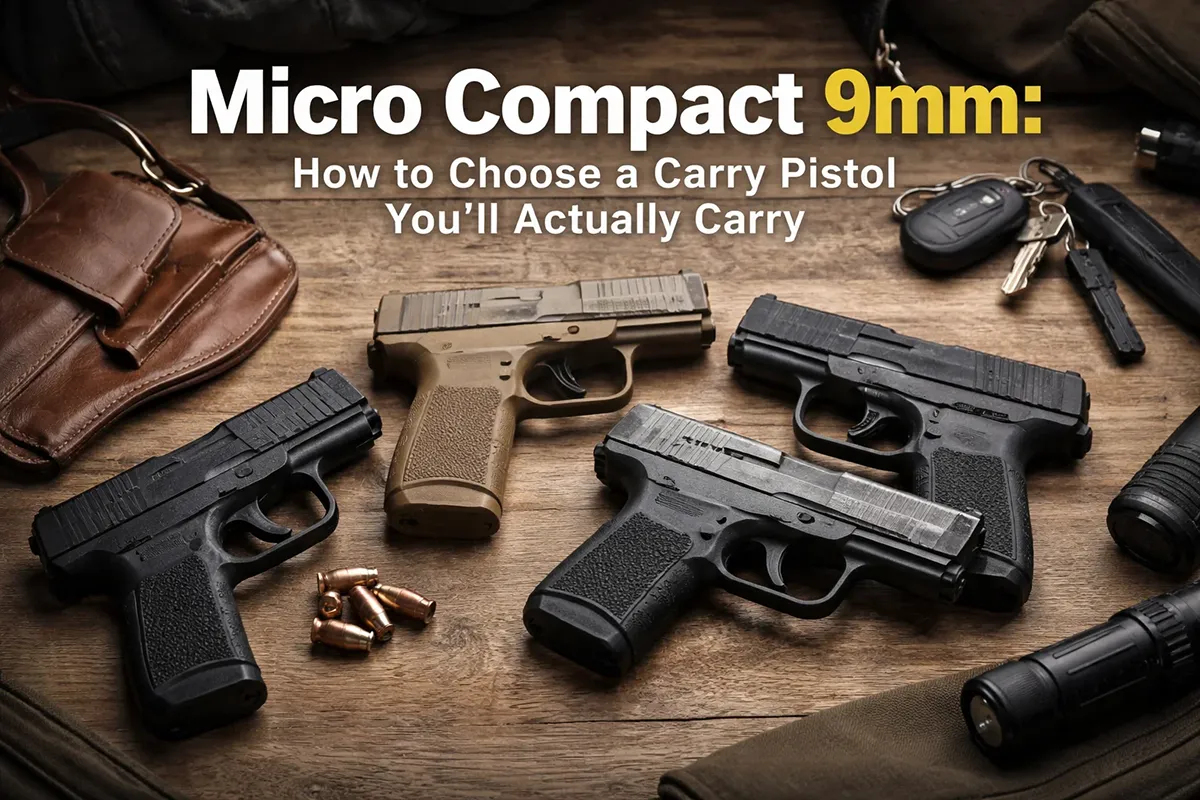
A micro compact 9mm is the modern sweet spot for concealed carry: small enough to hide under normal clothes, but big enough to shoot with real competence. In 2026, the category is mature—meaning you’re no longer choosing between “tiny but miserable” and “shootable but bulky.” The hard part now is picking a pistol that fits your hands, your carry method, and your tolerance for recoil and maintenance. This guide breaks down what matters, what’s optional, and what’s just marketing noise.
When people say they want “the best” micro compact, what they usually mean is: reliable function, controllable recoil, sights/optic options that make sense, and a grip that doesn’t punish them in practice. Because here’s the dirty secret: the pistol you’ll carry is the pistol you can conceal comfortably and shoot enough to stay sharp.
Micro compact 9mm basics: what counts (and what doesn’t)
“Micro compact” generally means a slim, short-barreled 9mm designed for concealed carry with a relatively high capacity for its size. That “capacity for size” part is the category’s whole reason for existing. You’ll see variations (slightly longer slides, slightly taller grips, different magazine lengths), but most models land in the same real-world lane: inside-the-waistband carry, fast presentation, and practical accuracy at typical defensive distances.
Start browsing the category here: semi auto pistols. It’s the fastest way to compare size classes and features without getting stuck on one brand too early.
The 5 decisions that matter most
- Grip length (concealment) vs control (shootability): A slightly taller grip prints more but usually shoots better. Many people end up preferring a “micro-compact with an extended magazine” rather than a truly tiny grip.
- Trigger reach and grip shape: If you can’t get a clean trigger press without shifting your grip, your accuracy will suffer. This matters more than brand.
- Recoil impulse and return-to-sights: Small guns recoil. The question is whether the gun returns to your sights predictably for follow-up shots.
- Optics-ready (OR) or irons only: An optics-ready slide adds flexibility. Even if you don’t mount a dot today, you might later.
- Magazine ecosystem and availability: Extra magazines are part of the “real cost.” Also consider how easy it is to find different capacities (flush, +1/+2, extended).
If you only remember one thing: grip fit beats spec-sheet bragging. A pistol that’s “perfect on paper” but awkward in your hand will be slower, less accurate, and less pleasant to practice with.
Spec snapshot: what to compare (without getting lost)
| Firearm | Platform | Action | Caliber | Barrel/Weight | Capacity | OAL | MSRP/Street |
|---|---|---|---|---|---|---|---|
| SIG Sauer P365 family | Micro compact | Striker-fired | 9mm | Varies by SKU | Varies by magazine | Varies by SKU | Varies by SKU |
| Springfield Hellcat family | Micro compact | Striker-fired | 9mm | Varies by SKU | Varies by magazine | Varies by SKU | Varies by SKU |
| Glock 43X/48 family | Slimline compact | Striker-fired | 9mm | Varies by SKU | Typically 10+ (OEM) | Varies by SKU | Varies by SKU |
| S&W M&P Shield Plus family | Slim micro-compact | Striker-fired | 9mm | Varies by SKU | Varies by magazine | Varies by SKU | Varies by SKU |
“Varies by SKU” isn’t a cop-out—it’s reality. Micro compacts often come in multiple barrel lengths, multiple sight packages, and multiple “ready” configurations. Always compare the exact version you’re actually considering, not the family name.
Optics-ready vs irons: what changes in real life
Optics-ready pistols aren’t automatically “better,” but they give you options. A micro red dot can make sighting faster for many shooters, especially in low light or when your focus is split. The tradeoff is added complexity: mounting, battery management, and making sure your holster and carry setup still work.
If you’re staying with iron sights, prioritize a setup you can see quickly. Many modern carry pistols ship with high-visibility front sights or night-sight variants. Whichever route you pick, the goal is the same: consistent, repeatable sight acquisition under stress.
Carry method drives the gun choice more than people admit
Two shooters can love the same pistol and still have totally different carry experiences. Why? Carry position, body shape, and wardrobe are the real boss fight. Before you fall in love with a model, decide where it’s going to live:
- Appendix IWB (AIWB): Often favors shorter slides for comfort, but grip length still dictates printing.
- Strong-side IWB: Can tolerate slightly larger guns, but comfort and concealment depend heavily on belt/holster angle.
- Pocket carry: Usually pushes you toward smaller guns (and stricter holster requirements). Many “micro compacts” are still too large for this in normal pockets.
- Off-body (bag): Concealment is easy, access can be harder. This is a systems choice, not just a gun choice.
A practical approach: pick your likely carry method first, then shop pistols that fit that method. Otherwise, it’s easy to buy a “great gun” that becomes a safe queen because it’s annoying to carry.
Shortlist: four common families and how to think about them
These models come up constantly because they cover the major “feels” within the micro-compact world: modular grip options, very compact footprint, slimline comfort, and balanced shootability. Explore the brands and models below to compare variations and configurations.
SIG Sauer P365: modular sizing without leaving the ecosystem
The P365 family is often researched by people who want to tune size and feel without starting over. Different grip modules, different slide lengths, and multiple “ready” configurations make it easier to land on the Goldilocks setup. If your priority is building a carry system that matches your hand size and concealment needs, this modular approach can be a major advantage.
Explore: SIG Sauer
Springfield Hellcat: compact footprint with carry-focused features
The Hellcat line is commonly cross-shopped with the P365 because it targets the same mission: maximum practicality in a small package. Many shooters like how it carries and how the grip locks in. If you want a micro compact that feels purpose-built for concealed carry, it’s a frequent finalist.
Explore: Springfield Armory
Glock 43X / 48: slim carry comfort and familiar Glock ergonomics
The Glock 43X and 48 often appeal to people who want a slim pistol that’s still comfortable to shoot, with a simple manual of arms and broad holster support. These are slightly different from “true” micro compacts in feel—often closer to a slim compact—but they’re in the same carry conversation because concealment is excellent and handling is predictable.
Explore: Glock
Smith & Wesson M&P Shield Plus: a balanced “do the basics well” option
The Shield Plus family is commonly chosen by people who want a carry pistol that’s straightforward, widely supported, and generally easy to live with. It’s often described as a “boring in the best way” pick: it tends to do the fundamentals well without requiring you to buy into a complex modular system.
Explore: Smith & Wesson
Reliability and maintenance: what owners learn after 1,000 rounds
Micro compacts can be extremely reliable, but they’re less forgiving than full-size pistols. Springs are working harder, slide mass is lower, and grip technique matters more. The most common real-world issues tend to come from:
- Ammo sensitivity: Some guns prefer certain bullet shapes or pressures. Confirm function with your chosen carry load.
- Magazine maintenance: Carry mags collect lint and grit. Clean them occasionally and replace worn springs if needed.
- Grip-induced malfunctions: Very small guns can be more sensitive to weak grip (especially for new shooters).
- Under-lubrication: Many small pistols run best with proper lubrication at the rails and contact points.
A simple standard: run at least a few hundred rounds through the pistol in its carry configuration (with your carry magazines), then confirm your defensive ammo functions and prints where you expect. The goal isn’t perfection—it’s confidence based on evidence.
Research checklist: pick the pistol that fits your life
- Carry position: AIWB, strong-side IWB, pocket, or off-body?
- Hand fit: Can you press the trigger straight back without shifting grip?
- Recoil tolerance: Can you shoot 100 rounds in a session without dreading it?
- Sight plan: Irons only, or optics-ready for future flexibility?
- Magazine plan: How many mags will you realistically buy and rotate?
- Holster availability: Does your chosen model have strong holster support for your carry method?
- Practice reality: Will you actually practice draws and reloads with this size gun?
If you do nothing else, handle (or shoot) two or three finalists and pick the one that gives you the best combination of: secure grip, clean trigger reach, and predictable recoil return. Specs won’t tell you that. Your hands will.