
45-70 Lever Action in 2026: How to Choose the Right Big-Bore Woods Rifle
February 6, 2026
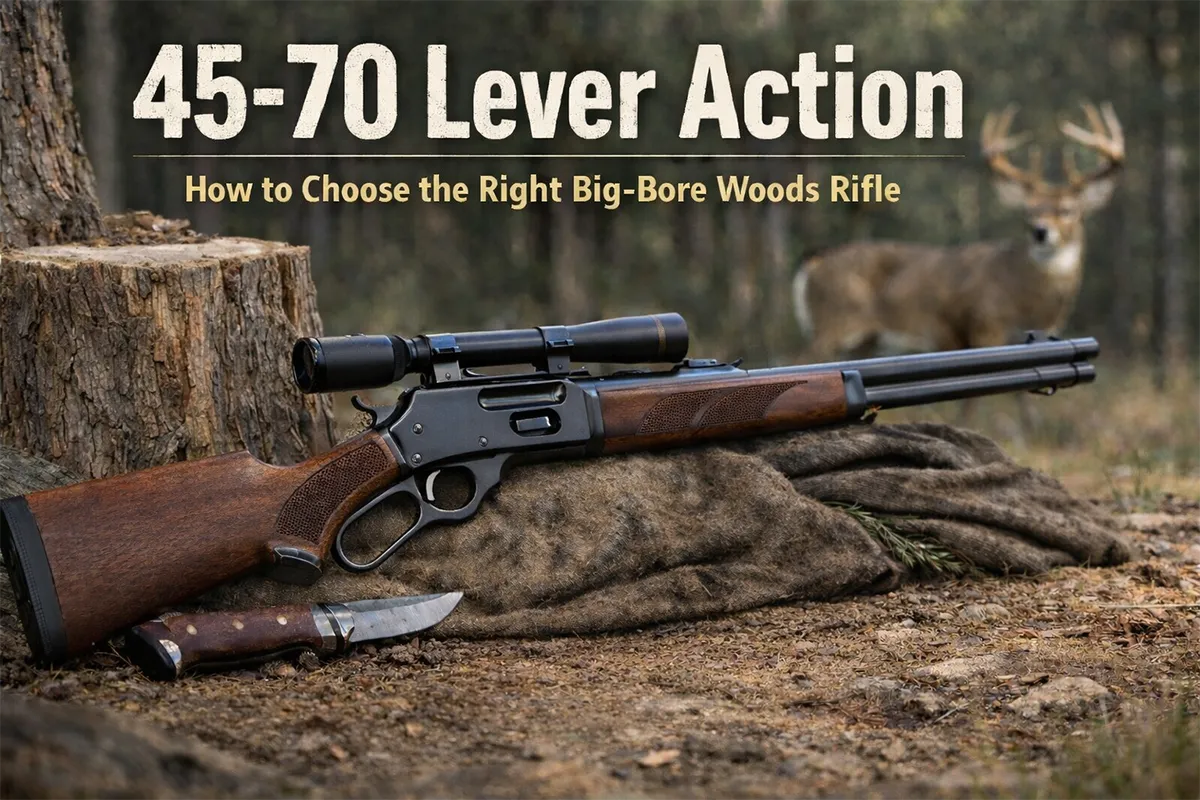
A 45-70 lever action is a short-range power tool that shines in thick woods, bear country, and “hit hard, track short” hunting. The best pick comes down to recoil tolerance, sight/optic setup, magazine tube capacity, and whether you want a classic blued/walnut rifle or a weatherproof, suppressor-friendly modern build.
The .45-70 Government is one of those cartridges that refuses to fade away. In 2026, it’s still popular because it solves a simple problem: deliver a big, heavy bullet with authority at practical woods distances. When you pair that with a handy lever gun—fast follow-up shots, slim profile, easy carry—you get a rifle that feels purpose-built for dense cover and close-to-midrange hunting.
But “.45-70” isn’t one thing. Loads range from mild, old-school pressure levels to modern high-performance hunting ammo intended for stronger actions. Rifles vary from traditional side-eject hunting carbines to optics-ready, rail-equipped “guide gun” setups. This deep dive is about picking the right system for your use, not chasing the loudest load.
Why a 45-70 lever action still makes sense in 2026
If you hunt in thick woods, shots tend to be quick, close, and sometimes at awkward angles. A 45-70 lever action is good there because it carries easily, shoulders fast, and hits hard when ranges are realistic. It’s also popular for hogs, black bear, and as a “just in case” rifle in places where big animals can be a real concern.
The tradeoff is obvious: recoil and trajectory. Even with modern loads, .45-70 is not a flat-shooting cartridge compared to common deer rounds. You can stretch it farther with the right ammo, good dope (your sight adjustments), and practice—but most people are best served treating it like a 0–200 yard specialist unless their setup and skill genuinely support more.
To browse the broader category and compare different actions and barrel lengths, start with the lever action rifles category on GunGenius.
Ammo reality: “Trapdoor” vs modern loads (and why you should care)
.45-70 has a long history, and that history matters because not all rifles are meant for the hottest loads. You’ll often see load categories described in a few informal tiers:
- Traditional / lower-pressure loads: Often marketed as safe for older rifles. Usually softer shooting and plenty for deer-sized game at woods ranges.
- Lever-gun / modern hunting loads: Built for stronger modern actions. Typically faster, harder-hitting, and more expensive.
- “Hot” loads: Intended for very strong platforms (and specific action types). Not a default choice for every rifle.
You don’t need to memorize categories—you just need a rule: match your ammo to your rifle. If a manufacturer specifies pressure/usage guidance, follow it. If you’re unsure, stick to mainstream hunting loads marketed for modern lever actions and confirm function and point of impact before hunting.
Recoil: the deal-breaker for a lot of people
Recoil is where .45-70 earns its reputation. A light, short “guide gun” with a firm buttpad and hot loads can be legitimately unpleasant—especially from the bench. The good news is that recoil is manageable if you make smart choices:
- Gun weight helps: Heavier rifles generally kick less.
- Stock fit matters: A stock that fits your shoulder and length-of-pull (LOP) reduces “punch.”
- Buttpad quality matters: It’s not glamorous, but it’s real.
- Ammo choice matters most: Mild-to-mid loads turn the .45-70 into a very shootable hunting rifle.
A quick, practical suggestion: do your first accuracy work with comfortable loads. Once you’re shooting well and your fundamentals are solid, step up to the hunting load you plan to carry and confirm zero and function. Your shoulder (and accuracy) will thank you.
Sights and optics: what actually works on a lever gun
Most 45-70 lever actions end up in one of three sighting setups:
- Iron sights (buckhorn or semi-buckhorn): Traditional and durable, but slower in low light and harder for aging eyes.
- Ghost ring / aperture sights: A fast, practical upgrade for woods ranges. Easier to pick up and often more precise than traditional buckhorns.
- Low-power optics: A simple scope or compact optic can be excellent, especially for low light and precise shot placement. The key is mounting stability and keeping it low enough to maintain a solid cheek weld.
When people struggle with optics on lever guns, it’s usually because the rifle wasn’t set up for it (or the optic ends up too high). If you want glass, prioritize models that are factory drilled/tapped or come with a solid rail system and make sure the stock geometry supports an optic without forcing a “chin weld.”
Specs that matter most in a 45-70 lever action
These are the details that change the real-world experience more than marketing names do:
- Barrel length: Short barrels carry well in brush. Longer barrels can steady the gun and may be more comfortable to shoot.
- Magazine tube capacity: Varies by barrel length and design. Decide if you want “hunt-first” capacity or a little extra onboard.
- Finish/materials: Stainless and coated finishes are easier to live with in wet climates. Blued and walnut are classic and pleasant, but need more care.
- Weight: A big deal for both recoil and carry comfort.
- Loading gate feel: Some rifles are smoother/easier to top off than others. If you can handle one in person, do it.
- Aftermarket support: If you want rails, stocks, or sight upgrades, choose a platform with common parts availability.
Shortlist table: common 45-70 lever-action “types”
| Platform | Use-case vibe | Finish/style | Optics readiness | Notes |
|---|---|---|---|---|
| Marlin 1895-style | Classic hunting / guide gun | Varies by SKU | Commonly optics-capable | Big aftermarket ecosystem; lots of variants |
| Henry 45-70 (All-Weather / Steel) | Workhorse woods rifle | Weatherproof or traditional | Many models drilled/tapped | Often smooth actions; check weight by SKU |
| Winchester 1886-style | Traditional, classic feel | Classic finishes | Varies by model | Heirloom vibes; not always “modernized” out of the box |
| Modern “tactical” lever variants | Accessory-ready, rugged | Rails/coatings | Usually very optics-ready | Great if you want light/optic/sling integration from day one |
“Varies by SKU” is doing a lot of work here because it’s true: the same model family can have a short barrel, long barrel, different furniture, different sights, different capacity, and different weight. Always compare the exact configuration you’re researching.
Three popular directions to research
1) The classic guide gun: compact, fast, and straightforward
If you want a do-it-all woods rifle that carries easily, this is the lane. These rifles are typically short enough to maneuver in brush, sturdy enough to ride in a truck or on an ATV, and simple to run. Recoil can be sharper in lighter configurations, so balancing barrel length, weight, and load choice matters.
Explore: Marlin on GunGenius
2) The weatherproof utility rifle: don’t baby it
If you hunt wet climates, bounce between seasons, or just want a rifle that shrugs off bad weather, look for stainless or coated finishes and furniture that won’t swell or warp. These tend to be “grab it and go” rifles—less romance, more reliability. They also make a lot of sense for hunters who want a lever gun but don’t want to treat it like a museum piece.
Explore: Henry on GunGenius
3) The classic traditionalist: blued steel, walnut, and a slower pace
If you’re drawn to .45-70 because it feels timeless, you’ll probably gravitate toward traditional finishes and classic lines. This route can be very satisfying—just be honest about how you’ll use it. If you’re going to mount a light and run it in hard weather, pick a configuration that supports that lifestyle. If it’s a fair-weather deer rifle, the traditional builds can be perfect.
Explore: Winchester on GunGenius
Compatibility and add-ons: slings, lights, and (maybe) suppressors
Most hunters will benefit from a basic sling setup and a sighting system they can see clearly at dawn/dusk. Lights are more common on “utility” builds for property use, hog work, or travel in bear country after dark. If you want a light, make sure your chosen lever gun has a practical way to mount one—either factory rail sections, common aftermarket support, or a handguard system designed for it.
Suppressors are increasingly part of modern rifle research, but with lever guns the details matter: barrel threading, sight height, and how the rifle balances with extra weight on the muzzle. If suppressed use is a priority, choose a configuration that is clearly set up for it rather than planning to “figure it out later.”
Research checklist: what to decide before you pick a model
- Range reality: What distance do you honestly expect to shoot in your hunting environment?
- Game and terrain: Deer in timber, hogs in thick brush, or bear country “just in case”?
- Recoil plan: Are you willing to run milder loads for practice, or do you want “full send” performance all the time?
- Sight plan: Irons, ghost ring, or optic? Make sure the rifle supports your choice cleanly.
- Weather exposure: Do you need stainless/coated, or will classic blued/walnut be fine?
- Carry style: Still-hunting and lots of walking favors lighter setups; stand/blind hunting can tolerate more weight.
- Accessory plan: Sling only, or sling + light + rail upgrades?
If you can answer those questions, you’ll narrow the field quickly—and avoid buying a gorgeous rifle that doesn’t fit how you actually hunt.