
Pistol Red Dot Footprints Explained (2026 Guide)
January 20, 2026
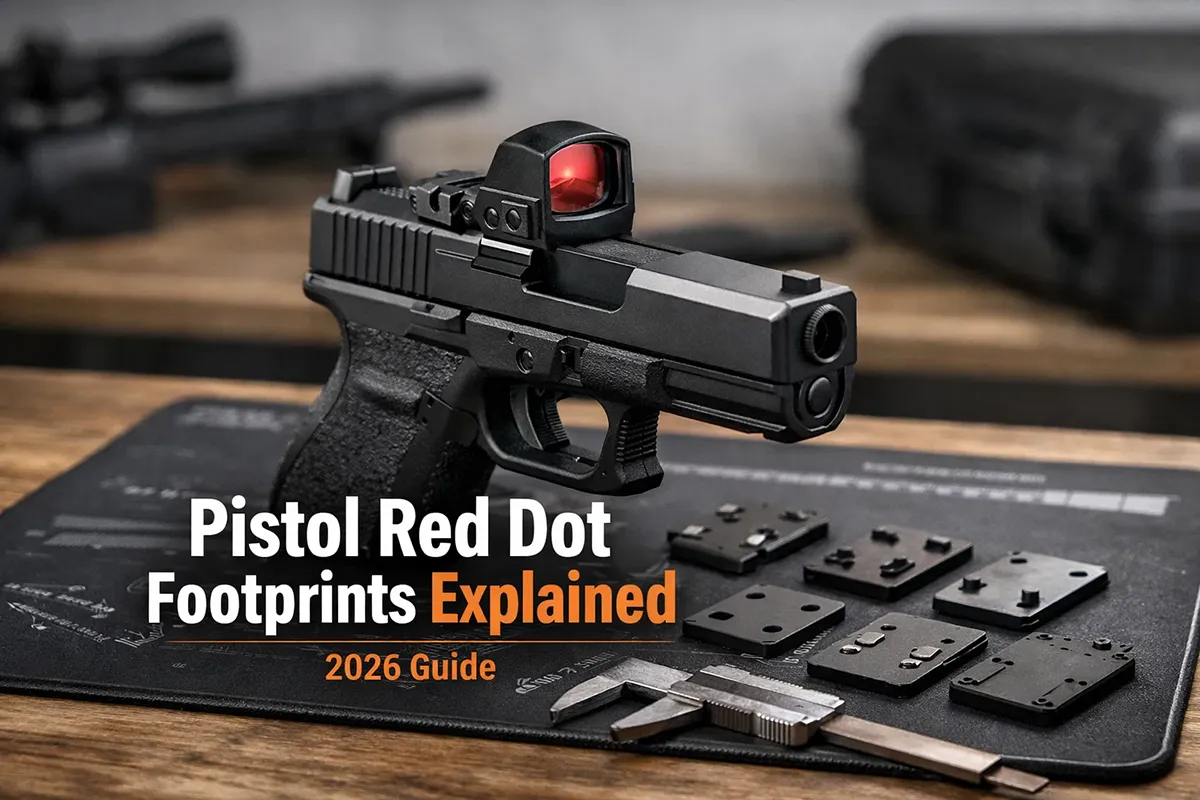
If you’re mounting a micro red dot to a handgun, pistol red dot footprints determine whether the optic fits your slide or plate. This 2026 guide demystifies the major patterns (RMR, RMSc/Shield, Holosun “K,” Docter/Noblex, DeltaPoint Pro, and ACRO), how plate systems and direct-mill slides change the equation, and what to check before you buy. You’ll leave with a clear compatibility checklist, a comparison table, and links to brand hubs and category pages on GunGenius to continue your research.
What “pistol red dot footprints” are—and why they matter
A footprint is the screw pattern, recoil lug geometry, and overall base outline that physically mates an optic to a slide. Even when two red dots look similar, they might use different screw spacing, screw size, or indexing lugs. That’s why an RMR-pattern optic won’t necessarily drop onto a slide that’s cut for an RMSc, and why plate systems exist on many optics-ready pistols. Get the footprint wrong, and you risk loose mounting, broken screws, zero shift, or an optic that simply doesn’t attach.
Modern optics-ready pistols ship with modular plates or a universal interface that accepts brand-specific plates. Others are direct-milled for one footprint only. There’s no “best” standard for everyone; RMR-style cuts emphasize ruggedness with stout bosses, RMSc-style cuts prioritize low profile on slim carry pistols, while enclosed-emitter footprints like ACRO favor weather and debris resistance. Your use case—concealed carry, duty, competition, or range—should drive the footprint you prefer.
Major pistol red dot footprints at a glance
Below is a quick-reference table of common footprints you’ll encounter in 2026. “Example Optics” are representative, not exhaustive—always confirm screws and plate stack specifics against your exact slide and SKU.
| Optic Footprint | Type | Typical Use | Example Optics | Mounting Notes |
|---|---|---|---|---|
| RMR / RMRcc (Trijicon family) | Open emitter (RMR); slim variant (RMRcc) | Duty/defense; hard-use | Trijicon RMR, RMR HD; RMRcc | Robust bosses; RMRcc is not cross-compatible with full-size RMR |
| RMSc / Shield | Open emitter, micro | Micro-compacts and slim carry | Shield RMSc; many “Micro” dots | Low deck height; short screws common—watch thread engagement |
| Holosun “K” | Open emitter, micro | Micro and compact carry | Holosun 407K/507K | Similar to RMSc but not identical; front/rear boss differences matter |
| Docter / Noblex | Open emitter | General carry/range | Docter/Noblex, Burris FastFire | Classic footprint; widespread on plates and adapter mounts |
| DeltaPoint Pro (DPP) | Open emitter, full-size | Competition / duty | Leupold DeltaPoint Pro | Large window; distinctive rear lugs |
| ACRO (Aimpoint) | Enclosed emitter | Duty / adverse conditions | Aimpoint ACRO P-2; compatible enclosed clones | Dovetail-style rail interface; fully enclosed housing |
Why closed vs. open emitter matters: Open emitters are compact and light, but their LED and emitter window are exposed; sweat, lint, rain, or snow can obscure the dot at the worst time. Enclosed emitters shield the emitter inside a tube or box-like housing, trading a bit of weight for reliability in weather and debris. Many shooters choose open emitters for pure concealment and enclosed for duty or harsh environments.
Plate systems vs. direct-milled slides
Plate systems give flexibility: one slide, many footprints. You mount a brand-specific plate to the slide, then the optic to the plate. The upsides are easy footprint changes and broad compatibility. Downsides include extra stack height (affecting co-witness) and more fasteners. Plate quality matters: steel or hard-anodized plates with proper bosses beat soft, poorly toleranced plates.
Direct-milled slides sit the optic low and reduce parts count. They’re great when you’ve picked a footprint and want optimal robustness and co-witness height with standard-height irons (or minimal suppressor-height irons). The downside: you’re married to that footprint. If you later switch to an enclosed emitter with a different pattern, you’ll need a new slide cut, a conversion plate (which adds height), or a different optic.
Choosing your footprint: match the role, not the logo
- Concealed carry (micro/compact): RMSc or Holosun “K” are popular for slim guns due to low deck height and small footprint. Ensure the screw length doesn’t bottom out in the slide, and re-check zero after the first 150–200 rounds.
- Duty / defensive duty-size: RMR and ACRO footprints lead for durability. RMR-pattern dots remain a baseline for impact resistance; ACRO-style enclosed optics shine when rain, sweat, or dust are in play.
- Competition / training: DPP and RMR footprints are common on race-ready slides for their large windows and wide aftermarket plate support. Make sure the window size complements your presentation speed and recoil tracking.
- Range / general use: Docter/Noblex-compatible options are widely available and budget-friendly; just confirm the exact plate supplied with your pistol.
Compatibility pitfalls to avoid
- “Close” isn’t compatible: RMSc and Holosun K look similar but aren’t interchangeable without modification. Boss placement and screw layout differ—forcing it is a recipe for stripped threads.
- Plate height and co-witness: Plate stacks often push the optic higher. If lower-1/3 co-witness is your goal, plan on suppressor-height irons—or pick a lower deck height (direct mill or RMSc on a micro).
- Screw length and pitch: Slides vary in thread depth. Use screws supplied for your
slide + plate + optic stack. Too-long screws can bind the extractor or fail to clamp the optic body. - Torque + threadlocker: Handgun dots aren’t “snug-it-and-forget-it.” Use the manufacturer’s torque spec (often inch-pounds) and a non-permanent threadlocker compatible with the material. Re-check at your first range session, then at regular intervals.
- Return-to-zero: Frequent plate swaps? Expect minor re-zeroing. Keep a note of your windage/elevation values for your standard carry/load.
Real-world setups: three common paths
1) The slim carry build: Micro 9mm pistol with an RMSc- or “K”-footprint optic, direct-milled or on the factory micro plate. Benefits: low profile and easy concealment. Checklist: choose an optic with a crisp dot (or multi-reticle if your eyes prefer a circle-dot), verify a firm battery tray/door, and test presentation from concealment to ensure the window “catches” your eye naturally. Consider co-witness irons only if they don’t slow your draw.
2) The duty/tough-conditions build: Full-size pistol, direct-milled for RMR or ACRO. Benefits: strong bosses, stout mounting screws, and—if ACRO or similar—an enclosed emitter that shrugs off sweat, rain, and dust. Checklist: verify holster fit with the optic’s housing, and run a 500–1,000 round reliability test including one-handed manipulations and support-hand-only strings to verify that the optic survives your real use.
3) The competition/training build: Duty-size or long-slide pistol with a large-window open emitter (RMR/DPP family) on a quality steel plate or direct-mill. Benefits: speed on transitions and tracking. Checklist: dial dot brightness for daylight steel, use a consistent presentation index point (front of the window or housing corner), and test different recoil springs if you’re shooting soft loads to keep the dot from dipping.
Research checklist (save this)
- Footprint decision: RMR, RMSc/K, DPP, Docter/Noblex, or ACRO?
- Emitter style: open vs. enclosed—match to environment and maintenance tolerance.
- Mounting path: direct-milled vs. plate; what’s the total stack height?
- Co-witness plan: standard-height, lower-1/3, or no irons (with a backup plan)?
- Screw kit: correct length/pitch for your slide/plate/optic combination.
- Torque & threadlocker: manufacturer specs; record your settings.
- Battery strategy: side tray vs. bottom load; replacement interval and witness marks.
- Training reps: initial zero confirmation (10–15 yards), recoil tracking at speed, and periodic fasteners check.
Pistol red dot footprints in 2026: what’s new or trending
Across the last 30 days, interest has tilted toward enclosed emitters for duty-size pistols and low-deck RMSc/K footprints for micro-compacts. Manufacturers keep adding “plate delete” direct-mill options on flagship pistols, letting you pick a footprint up front and skip plates entirely. Meanwhile, plate ecosystems have improved with stronger steel inserts and better boss geometry. Expect more cross-compatibility plates (e.g., RMSc-to-K) and factory pistols shipping with two or more plates in the box.
On the optic side, you’ll see cleaner glass with less tint, better battery life, and bigger adjustment ranges tailored to short pistol sight radius. Enclosed designs are becoming lighter and more compact every quarter, narrowing the size penalty versus open emitters. For many shooters, the deciding factor is still holster fit and window size—try to verify your typical draw-to-first-shot time with the window you’re considering before committing.
Smart buying: avoid the most common return reasons
- Wrong plate in the box: Some pistols ship with only one or two plates; others require an aftermarket plate for DPP or ACRO. Identify your target footprint first, then verify the exact plate SKU before purchase.
- Deck height surprises: The optic looks great but sits high, forcing extra-tall irons. If you care about concealment, mock up the stack height and holster clearance early.
- Holster conflict: Boxy enclosed emitters can crash into older holster molds. Confirm holster options for your gun/optic pair.
- Batteries and tools: Keep spare batteries, the correct Torx/hex bits, a small torque driver, and witness paint in your range kit. It’s cheap insurance against lost zero and loose screws.
Bottom line: pick the footprint that fits your role, confirm plate/slide compatibility for your exact pistol, and mount with proper screws and torque. Do that, and any of the major ecosystems will serve you well.