
Single-Shot Rifles in 2026: The Simple, Lightweight Hunting Tool Making a Quiet Comeback
January 8, 2026
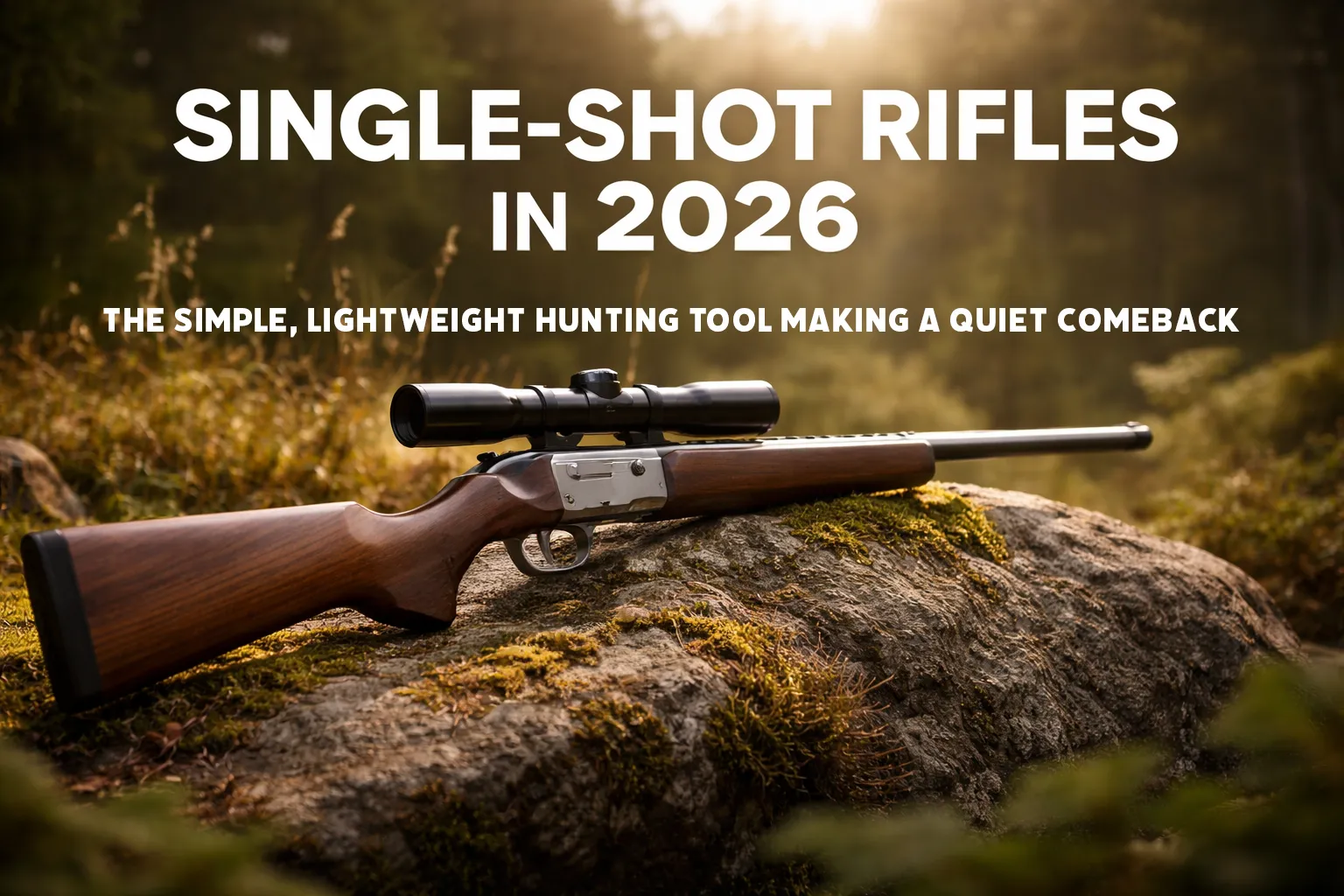
Single-shot rifles are still the best “less is more” option for hunters and practical shooters who want light weight, clean handling, and mechanical simplicity. Pick the right action style (usually break-action), match the caliber to your realistic distances, and prioritize optics readiness and stock fit—those three choices matter more than any marketing label.
As of today, single-shot rifles are having a very modern moment. Not because they’re trendy, but because they solve a real problem: many shooters want a rifle that’s easy—easy to carry, easy to verify safe, easy to maintain, and easy to hand to a newer hunter without turning the day into a troubleshooting clinic. (One shot also has a funny way of improving decision-making—no app required.)
If you’re shopping, start by browsing the Single Shot Rifles category, then narrow down by caliber and brand family.
Why Single-Shot Rifles Are Worth Considering Again
In a world full of high-capacity, high-feature rifles, a single-shot seems like a step backward—until you use one for the jobs where simplicity wins. For many hunters (especially in thick woods, steep terrain, or “carry it all day” country), weight and handling are the whole game. For newer shooters, the clear “load one, shoot one” rhythm removes a lot of confusion and helps build safe habits fast.
- Lightweight by nature: Many single-shots are built without magazines, complex feed systems, or heavy receivers.
- Easy safety checks: Open the action and it’s obvious what’s going on—great for coaching and range etiquette.
- Low-maintenance ownership: Fewer moving parts and fewer “compatibility” rabbit holes.
- Practical field carry: Short, handy barrels and trim stocks are common.
Single-Shot Rifles: The 3 Common Action Types (and What They’re Best At)
“Single-shot” describes capacity, not one specific design. These are the most common setups you’ll run into while browsing:
- Break-action (most common): Hinge-open action that loads one round directly into the chamber. These dominate the category because they’re straightforward, durable, and often affordable.
- Falling-block: A classic design where a breechblock moves vertically to load a single round. Often prized for strength and old-school craftsmanship.
- Single-shot bolt or specialty actions: Less common as “pure” single-shots, but they exist—especially as niche precision or collector-oriented rifles.
For most buyers in 2026, break-action rifles are the practical starting point. They’re also where you’ll find the widest range of calibers, barrel lengths, and price points.
What to Look For Before You Pick a Caliber
Caliber matters, but the rifle has to fit your real use. These features decide whether you’ll love the rifle after the honeymoon period:
- Optics readiness: If you plan to run a scope or red dot, prioritize models that come drilled/tapped or railed in a clean, standard way. “Optics-ready” beats “maybe my local shop can make it work.”
- Extractor vs. ejector: An extractor lifts the case so you can remove it; an ejector kicks it clear. Extractors are calmer (and easier on your brass); ejectors are faster for follow-ups.
- Stock fit (length of pull): A youth hunter forced into a too-long stock is a recipe for awkward form. Many single-shots shine here because they’re often offered in compact configurations.
- Recoil management: Light rifles can kick harder. A good recoil pad and sensible caliber selection matter more than internet bravado.
- Sling studs and carry setup: If it’s a hunting rifle, you’ll carry it. Don’t ignore the basics.
- Trigger feel: You don’t need a match trigger, but you do want predictable and consistent.
Picking the Right Caliber for a Single Shot Rifle
Single-shots are available in everything from rimfire trainers to serious big-game calibers. The key is matching recoil and effective distance to your honest shooting conditions.
Rimfire (.22 LR and friends): training and small game
Rimfire single-shots are underrated teachers. They encourage fundamentals, make ammo budgets happier, and work well for small game. If the goal is high-volume practice and easy handling, rimfire is hard to beat.
Mid-range deer calibers: practical hunting without punishment
For typical deer hunting distances, a mid-range caliber in a well-fitting rifle is usually the “most success per dollar” move. This is where optic-ready setups and manageable recoil pay off—especially for newer hunters who need confidence more than horsepower.
Heavy hitters (like .45-70 class): woods work and big-bore fans
Single-shots often show up in big-bore chamberings because they’re mechanically straightforward and can be built strong. Just be realistic: a light, short rifle in a heavy caliber can be a lot to shoot well. If you don’t enjoy practicing with it, you won’t practice with it.
A Quick Specs Table to Compare Platforms
Use this table to sanity-check what you’re seeing while you browse listings. The numbers are typical ranges (not a promise), but they help you compare apples to apples.
| Platform | Action | Caliber | Barrel length / Weight | Capacity | Overall length | MSRP / Street |
|---|---|---|---|---|---|---|
| Utility single-shot | Break action | Rimfire to common deer calibers | 16–22 in / ~5–7 lb | 1 | Short to mid-length | Budget to mid |
| “Scout-ish” takedown single-shot | Break action | Woods-to-general hunting calibers | 18–25 in / ~6–7.5 lb | 1 | Mid-length | Mid |
| Classic single-shot | Falling block | Traditional hunting/collector calibers | 22–30 in / varies | 1 | Often longer | Mid to premium |
| Big-bore woods thumper | Break action | Big-bore class | 18–25 in / ~6–8 lb | 1 | Mid-length | Mid to premium |
Three Brand Families to Start Your Research
If you want a clean starting point, focus on a few well-known single-shot lineups, then filter by caliber and features. Here are three brand hubs that make research easy:
- Henry — known for classic styling and straightforward designs that appeal to hunters and collectors alike.
- CVA — a common choice for practical break-actions that prioritize field use and value.
- Traditions — often associated with budget-friendly utility rifles and beginner-friendly setups.
Once you’ve picked a brand family, use the filters to narrow to the one feature that really changes the experience—usually optics mounting, barrel length, or weight.
How to Choose the “Right” Single Shot Rifle in 10 Minutes
- Step 1: Decide your true distance. If most shots are inside common woods ranges, pick a setup you’ll practice with—not the loudest option on the shelf.
- Step 2: Pick the carry profile. If you’ll hike, go lighter and shorter. If you’ll sit, you can tolerate a bit more barrel and weight.
- Step 3: Confirm optics compatibility. If you want glass, don’t treat mounting like an afterthought.
- Step 4: Check recoil realism. Light rifle + heavy caliber can be a rough pairing for new shooters.
- Step 5: Choose extractor/ejector preference. Smooth and controlled, or fast and snappy.
After that, it’s just comparison shopping—and GunGenius is built for exactly that. Browse the full Rifles section if you want to cross-shop other actions before committing.
What to Watch in 2026
Single-shot rifles tend to evolve in small, meaningful ways rather than big redesigns. In 2026, the improvements that matter most will likely be “quality of life” upgrades: better factory rails and mounting standards, more compact stock options, and more weather-resistant finishes on affordable rifles. None of that is flashy—but all of it makes a simple rifle easier to live with.
If you want the fastest path to availability and pricing, the smartest move is to search by the phrase “single shot rifle” or your chosen caliber and compare current listings.