
22 LR Revolver Buyer’s Deep Dive: What Matters Most in 2026
February 2, 2026
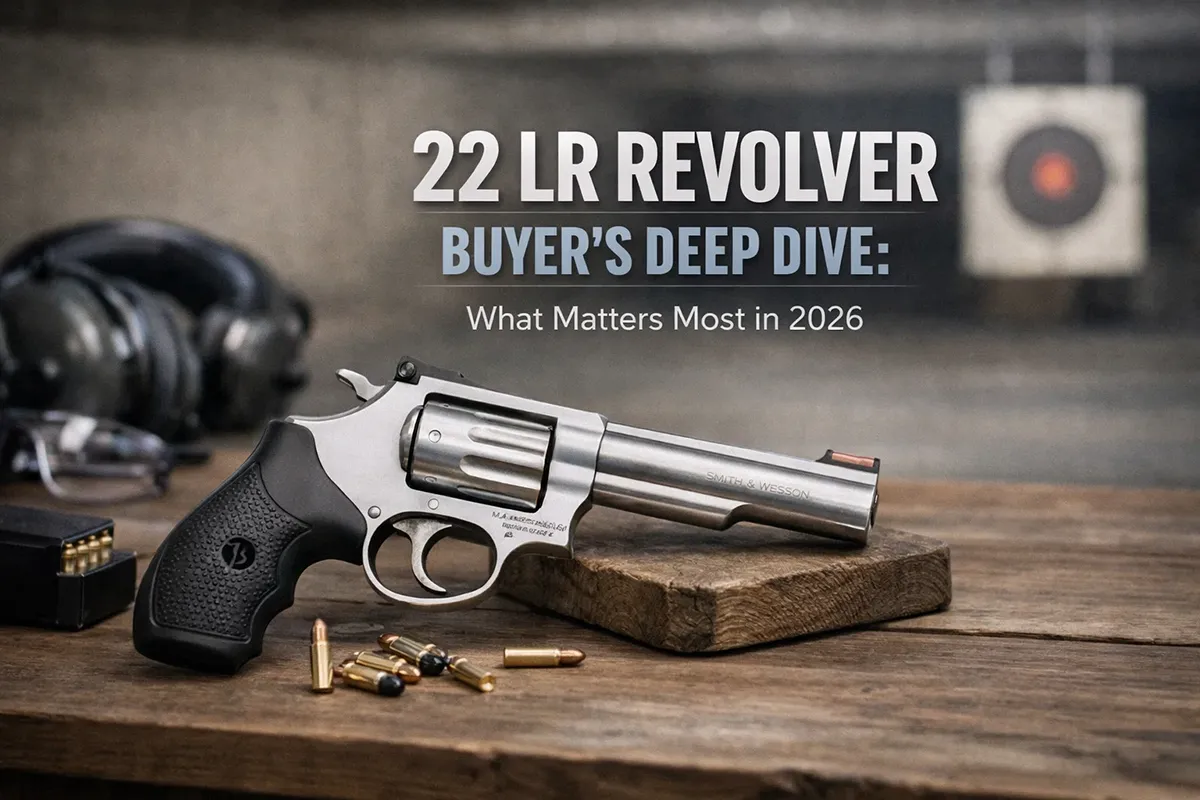
A 22 LR revolver is still one of the smartest “actually shoot it a lot” handguns you can research in 2026—especially for training, new shooters, small-game/field use, and low-stress practice. The best choice comes down to action type (single-action vs double-action), cylinder capacity, sight setup, trigger feel, and how much you care about speed vs simplicity.
Rimfire ammo isn’t perfect, and revolvers aren’t trendy. But if your goal is reps—trigger control, sight tracking, grip, and safe handling—few platforms stretch your range budget like a rimfire wheelgun. In a world of optics cuts, chassis systems, and “latest-and-greatest,” a .22 revolver is the boring friend who always shows up and pays you back in skill. (Boring is underrated.)
This deep dive will help you decide: (1) what kind of 22 LR revolver fits your use case, (2) which features are worth paying for, and (3) what to compare when you’re scrolling specs and listings. If you want to browse the whole category while you read, start here: Revolvers.
Why a 22 LR Revolver Still Makes Sense in 2026
Most people researching a .22 handgun are doing it for one of four reasons: training, introducing a new shooter, small-game/field carry, or plain old backyard-range fun. A .22 semi-auto pistol can be great for those jobs—but a revolver changes the equation in a few practical ways:
- It’s less sensitive to ammo quirks. Rimfire ammunition can be inconsistent. A revolver doesn’t rely on cycling energy to feed the next round, so you’ll spend less time diagnosing “is it the ammo, the magazine, the recoil spring…?”
- It forces good fundamentals. With slower reloads and a heavier trigger (on many models), you tend to shoot more deliberately. That’s a feature, not a bug, if your goal is accuracy and control.
- It’s an honest training tool. A double-action trigger teaches a smooth press. A single-action teaches consistent sight alignment and follow-through. Both teach grip discipline and safe muzzle habits.
- It’s a simple “grab-and-go” field gun. For pests, snakes, and camp chores (where legal), a .22 revolver is compact, durable, and straightforward.
None of that means a revolver is “better” than a semi-auto—just that it’s a different kind of useful. If you’re choosing one rimfire handgun as a skill-builder, a revolver is still a top contender.
Single-Action vs Double-Action: Pick Your Training Goal
The first decision is action type. “Action” is how the gun cocks and releases the hammer. In plain English:
- Single-action (SA): You manually cock the hammer before each shot. The trigger press is typically lighter and cleaner. SA revolvers are excellent for slow-fire accuracy, deliberate practice, and traditional handling. They’re also common in budget-friendly rimfire revolvers.
- Double-action (DA/SA or DAO): A double-action press both cocks and releases the hammer in one long pull (and many DA/SA guns can also be fired single-action). Double-action practice is one of the best ways to build trigger control that carries over to defensive handguns.
If your main goal is marksmanship fundamentals, a single-action rimfire revolver is hard to beat. If your goal is defensive-skill crossover (smooth trigger press under time), a double-action revolver has the edge. If you want a “one gun” trainer for a household, DA/SA is a great middle ground because you can start new shooters in single-action and progress to double-action later.
The Spec Checklist That Actually Matters
When you compare models, avoid getting distracted by cosmetic variants. These are the specs that change the experience the most:
- Cylinder capacity: Most rimfire revolvers are 6-shot, but 8-, 9-, and 10-shot options exist. Higher capacity is great for drills and range time. Lower capacity is often trimmer and lighter.
- Barrel length: Short barrels carry easily; longer barrels are steadier and usually easier to shoot well with irons. “Best” depends on whether you’re training, hiking, or mostly bench/rest shooting.
- Sights: Fixed sights are durable and simple. Adjustable sights help you zero to your ammo and shoot tighter groups. If you plan to use different loads, adjustable sights are worth prioritizing.
- Trigger feel: Triggers vary a lot. A smooth double-action press matters more than a light one. If possible, prioritize models known for consistent triggers over models loaded with gimmicks.
- Frame size and grip fit: If the grip doesn’t fit your hand, you’ll fight the gun. Especially for new shooters, comfortable grip geometry matters more than “cool features.”
- Loading/unloading ergonomics: Ejector rod length, cylinder latch style, and how easily you can manipulate the gun with cold hands all matter in real life.
If you’re researching by brand first, it can help to start with a manufacturer page, then narrow by action and barrel length. For example: Ruger has multiple rimfire revolver families that cover everything from budget plinkers to higher-end trainers.
Quick Comparison: Popular 22 Revolver “Archetypes”
Instead of chasing one “best,” think in archetypes. Here are the common lanes shoppers fall into, plus what to watch for when you compare listings.
| Platform | Action | Caliber | Barrel/Weight | Capacity | OAL | MSRP/Street |
|---|---|---|---|---|---|---|
| Budget plinker SA | Single Action | .22 LR | Varies by SKU (often short–mid) | Usually 6 | Varies by SKU | Varies; check listings |
| Convertible “two-cylinder” SA | Single Action | .22 LR (often + .22 WMR) | Varies by SKU (mid–long common) | Usually 6 | Varies by SKU | Varies; check listings |
| Training-focused DA/SA | Double/Single Action | .22 LR | Varies by SKU (mid common) | Often 8–10 | Varies by SKU | Varies; check listings |
| Lightweight kit/field DA | Double Action (or DA/SA) | .22 LR | Varies by SKU (short common) | Varies (6–8 common) | Varies by SKU | Varies; check listings |
That table is intentionally generic because rimfire revolvers can vary a lot by SKU and trim. The point is to help you match the “type” to your use case before you stress over details like finish, engraving, or limited editions.
Real-World Picks: What to Compare (Without Getting Brand-Locked)
Below are a few common comparison anchors that make sense for most shoppers. You don’t need to buy these exact models—use them as reference points when you compare specs, size, and intended role.
1) The “I want cheap reps” single-action lane
If your goal is a simple, durable rimfire that you’ll shoot a lot, the budget single-action lane is appealing. These are usually fixed-sight, 6-shot revolvers with straightforward handling. Your research focus should be: build quality consistency, how the sights hit with common ammo, and whether the grip shape fits you.
Model pages to start your research (and compare variants): Ruger Wrangler and Heritage Rough Rider.
2) The “small-game + flexibility” convertible lane
If you like the idea of one revolver that can cover more than one job, convertible models (commonly .22 LR with a second cylinder for .22 WMR) are worth a look. The practical benefit isn’t magic power—it’s flexibility. You can train on .22 LR and still have an option for a bit more velocity where it’s appropriate and legal.
Your research focus: how easy the cylinder swap is, whether the sights regulate well for your most-used load, and whether the revolver’s size/weight is something you’ll actually carry.
3) The “serious trainer” double-action lane
If you want rimfire practice that translates to centerfire defensive shooting, a double-action trigger is the point. Look for a revolver with a smooth DA pull, good sights, and enough cylinder capacity to run drills without constantly reloading.
Research anchors many shooters compare: Smith & Wesson rimfire K-frame style guns (often 10-shot) versus smaller-frame options from brands like Taurus (often 8-shot in certain lines). The right answer depends on whether you prioritize “range trainer feel” (often larger/heavier) or “carryable kit gun” size.
Reliability Reality Check: Rimfire Ammo and Revolver Maintenance
Rimfire ammunition is inherently different from centerfire: the priming compound is distributed in the rim, and ignition can be less consistent. Revolvers help because they don’t need to feed from a magazine, but they don’t make rimfire “perfect.” Here’s the practical way to think about it:
- Expect occasional duds. With a revolver, you can typically just move to the next chamber (following safe handling rules).
- Keep the gun clean where it matters. Rimfire can be dirty. Pay attention to the cylinder face, forcing cone area, and under the extractor star—common spots where gunk can cause drag.
- Don’t chase “match ammo” too early. For most people, the biggest gains come from consistent practice, not boutique ammo. Find a reliable load and stick with it for training.
If you’re buying a rimfire revolver mainly for training, prioritize a model that stays smooth when it’s slightly dirty, and that’s easy for you to manipulate safely. A gun you enjoy maintaining is a gun you’ll actually maintain.
Research Checklist: How to Choose the Right One for You
Before you click “buy” (or even before you fall in love with a photo), run this checklist:
- Define the primary role: training, new shooter, field carry, or collecting.
- Pick the action type that matches the role: SA for slow accuracy and simplicity; DA/SA for skill crossover.
- Choose your size target: short barrel for carry/kit use; mid/long barrel for steadier aiming and easier precision.
- Decide on sights: fixed for rugged simplicity; adjustable if you want to dial in your point of impact.
- Choose a capacity preference: 6 if you want classic/compact; 8–10 if you want fewer reload interruptions.
- Compare parts and support: holsters, grips, and common replacement parts can matter more than a fancy finish.
- Sanity-check the price against condition: rimfire revolvers live long lives—condition and previous care matter.
Once you’ve got those answers, browsing gets easier: you’re no longer shopping “everything,” you’re shopping a clearly-defined tool. If you want to keep it broad while you compare, use the category page: Revolvers.
What to Watch Next in 2026
Rimfire revolvers don’t change fast, but a few trends tend to ripple through the market:
- More “trainer-first” configurations: higher capacity cylinders and better sights show up when brands lean into training value.
- Better factory grips and textures: small ergonomic updates can make a budget revolver feel significantly better in the hand.
- More SKU variety: barrel lengths, finishes, and special runs often expand in waves—good for choice, but it can make research noisy.
The upside: you don’t need to chase the newest model year. If you find a revolver that matches your role, fits your hand, and has the sights/trigger you want, it’s likely to remain a “good pick” for a long time.