
20 Gauge Semi-Auto Shotgun: How to Pick the Right One for Upland Birds, Clays, and All-Day Carry
March 13, 2026
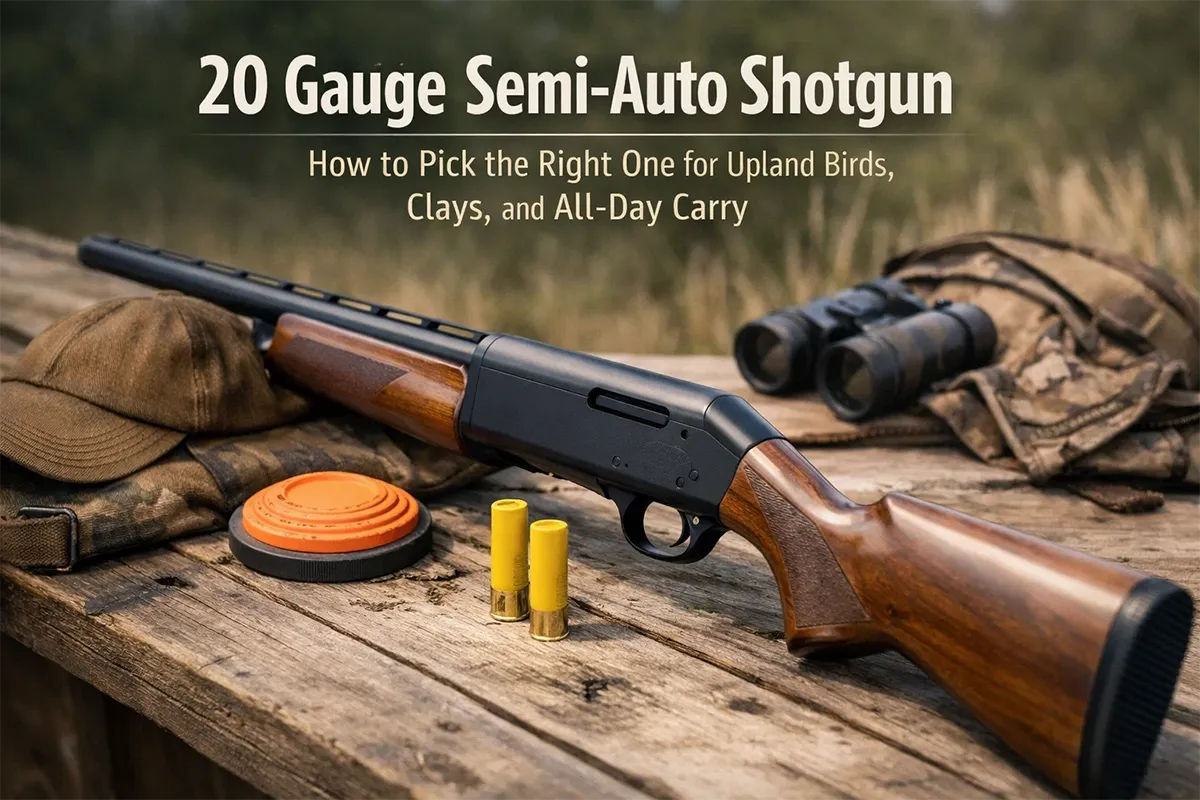
If you are researching a 20 gauge semi-auto shotgun, you are usually trying to solve a pretty practical problem: you want a shotgun that is easier to carry and easier to shoot for long sessions than a typical 12 gauge, but you do not want to give up so much performance that birds get away or clay targets start surviving out of spite. For many shooters, 20 gauge is the “sweet spot” choice for upland hunting, casual sporting clays, smaller-framed shooters, and anyone who values lower recoil over raw payload.
This guide focuses on what actually matters when comparing models in the semi-auto shotgun category: weight, operating system, barrel length, stock fit, and the kinds of loads you plan to shoot most often. You will also see where brands like Benelli, Beretta, and Franchi tend to differ in feel and use case. The goal is not to crown a universal winner. It is to help you narrow the field to the shotgun that fits your shoulder, your hunting style, and your tolerance for recoil.
Why a 20 Gauge Semi-Auto Shotgun Makes Sense
A 20 gauge is not just a “lighter 12.” In practical use, it fills a distinct role. Most 20 gauge semi-autos are trimmer through the receiver and easier to carry one-handed while walking fields, woods, or brushy edges. That matters more than many buyers expect. Half a pound saved on paper does not sound dramatic, but after a few hours covering ground, it feels very real.
The second big advantage is recoil. A semi-auto already reduces felt recoil compared with a break-action or pump because part of the gun’s operating cycle absorbs energy. Pair that with 20 gauge loads, and the result is often a shotgun that is more comfortable for new shooters, younger shooters, smaller adults, and experienced hunters who simply want a gun they enjoy practicing with. Comfortable guns get shot more. Guns that get shot more tend to get shot better.
The tradeoff is straightforward: 20 gauge usually gives you less shot payload than 12 gauge. That can reduce your margin for error on longer crossing birds, late-season pheasants, or high-volume waterfowl use. For upland birds, doves, rabbits, and clays, though, many shooters find the trade worth making. Inside normal field distances, a well-fitted 20 gauge with the right choke and shell can be extremely effective.
20 Gauge Semi-Auto Shotgun Buying Priorities
Start with the question most buyers skip: what will this shotgun do most of the time? Not once a year. Most of the time. A 20 gauge built for long walks after quail will not feel ideal for a sporting clays day with hundreds of shells, and a soft-shooting clays-friendly gun may feel a bit heavier than you want in rough cover. The right answer depends on your main use, not your most ambitious one.
| Priority | What to Look For | Why It Matters |
| Carry Weight | About 5.5 to 6.5 pounds | Lighter guns are easier to carry all day, especially for upland hunting. |
| Operating System | Inertia or gas | Inertia systems are often simpler and lighter; gas systems often feel softer in recoil. |
| Barrel Length | 24, 26, or 28 inches | Shorter barrels feel quicker; longer barrels often swing smoother. |
| Stock Fit | Length of pull, comb height, shim kits | Fit affects comfort, pointability, and consistent hits more than many spec-sheet items. |
| Load Range | Target loads to hunting loads | Some guns are more flexible with lighter shells than others. |
| Controls | Safety, bolt release, charging handle | Easy controls matter in gloves, bad weather, and fast reloads. |
Weight and balance should be your first screen. Lighter shotguns feel lively and quick, which many upland hunters love. The downside is that very light guns can also feel whippier and may punish you more during high-round-count range sessions. A slightly heavier 20 gauge can be the better choice if your year includes a lot of clays practice. Think of it this way: field guns are carried more than they are fired, but clays guns are fired more than they are carried.
Then consider the action type. Inertia-driven guns often run cleaner because there is no gas system to trap as much fouling, and they are frequently lighter overall. Gas-operated guns, by contrast, often feel softer and flatter under recoil, especially with target loads. Neither system is “better” in every case. One usually leans toward simplicity and lower weight; the other leans toward recoil comfort and softer shooting characteristics.
Barrel Length, Fit, and Why Specs Can Mislead You
When buyers compare 24-, 26-, and 28-inch barrels, they often imagine huge differences. In reality, the change is meaningful but not dramatic. A 24-inch barrel can feel very quick in tight cover or for smaller shooters. A 26-inch setup is the common middle ground because it balances handling and swing without leaning too hard in either direction. A 28-inch barrel often feels smooth and deliberate, which many clay shooters and pheasant hunters appreciate.
Fit matters more than barrel length in most cases. A shotgun that points naturally will do more for your hits than another two inches of steel. Length of pull is the distance from the trigger to the buttpad; if it is too long, the gun can feel awkward to mount. Comb height affects where your eye sits above the rib; because your eye acts like the rear sight on a shotgun, that changes where the gun prints in relation to your point of aim. Shim systems can help fine-tune fit, and they are worth paying attention to.
Do not buy based on chamber size alone, either. A 3-inch chamber sounds flexible, and it can be, but that does not automatically make a gun better for your actual use. If you mostly shoot standard target and upland loads, reliability with those everyday shells matters more than having a longer chamber you rarely use. Matching the gun to your common loads is smarter than shopping for bragging rights on the box.
Brand Personalities: Benelli vs Beretta vs Franchi
This is where comparison becomes useful. Brands tend to have distinct personalities even when they occupy similar price bands. On the Benelli side, buyers often gravitate toward lighter, trim-feeling guns with inertia operation and a reputation for straightforward field use. These are often attractive to hunters who prioritize easy carry, simple maintenance, and a crisp, lively feel.
Beretta often appeals to shooters who want softer recoil characteristics and a more settled feel on the swing, especially in gas-operated models. That can make a lot of sense for clays crossover use or for anyone who is sensitive to recoil and wants a shotgun that encourages more practice.
Franchi often lands in a very interesting middle ground for buyers who want a field-friendly gun with strong value and practical features. Depending on the model, Franchi can be especially appealing to hunters who want a trim, modern 20 gauge without immediately jumping to the highest price tier.
The key point is that none of these are automatically “best.” A lighter inertia gun may be perfect for grouse cover but less pleasant for a full sporting clays afternoon. A softer-shooting gas gun may be terrific on the range but slightly less appealing if every ounce matters on steep terrain. That is not a flaw. It is the point of having different design priorities in the market.
Best Use Cases for a 20 Gauge Semi-Auto Shotgun
For upland birds, this category shines. Quail, woodcock, grouse, and many pheasant setups reward a shotgun that mounts quickly, carries easily, and does not wear you out halfway through the day. A 20 gauge semi-auto fits that mission very well, especially when paired with a barrel length and choke setup that match the terrain.
For sporting clays and casual target shooting, the 20 gauge can be a smart choice for building skill without getting beaten up. Lower recoil helps many shooters maintain form, stay engaged through longer sessions, and recover faster between pairs. It is also a very reasonable option for mixed households where one shotgun may be used by shooters with different sizes and experience levels.
For general small-game and farm use, a 20 gauge semi-auto remains one of the most versatile shotgun types you can own. It is capable without feeling excessive, which is part of its long-term appeal. It is not the answer to every shotgun problem, but it is a very good answer to many of them.
Research Checklist Before You Buy
- Decide whether your main job is upland hunting, clays, or a true split between both.
- Set a target carry weight before you fall in love with looks or brand names.
- Choose between inertia and gas based on recoil preference and maintenance priorities.
- Think about the loads you will actually shoot most often, not just the hottest loads the gun can chamber.
- Check stock fit features such as shims, spacers, and overall length of pull.
- Handle at least a few models if possible; balance and mount feel can override spec-sheet assumptions.
A final reality check: the “best” 20 gauge semi-auto shotgun is usually the one that fits you well, points naturally, and encourages regular practice. That answer is less glamorous than chasing the trendiest nameplate, but it is usually the more useful one. In shotguns especially, fit is not a side note. It is the main event.
For more options, start with the broader semi-auto shotguns category, then compare how the current lineups from Benelli, Beretta, and Franchi line up with your priorities.