
10mm Backcountry Handguns: 2025 Deep Dive & Buyer’s Guide
December 11, 2025
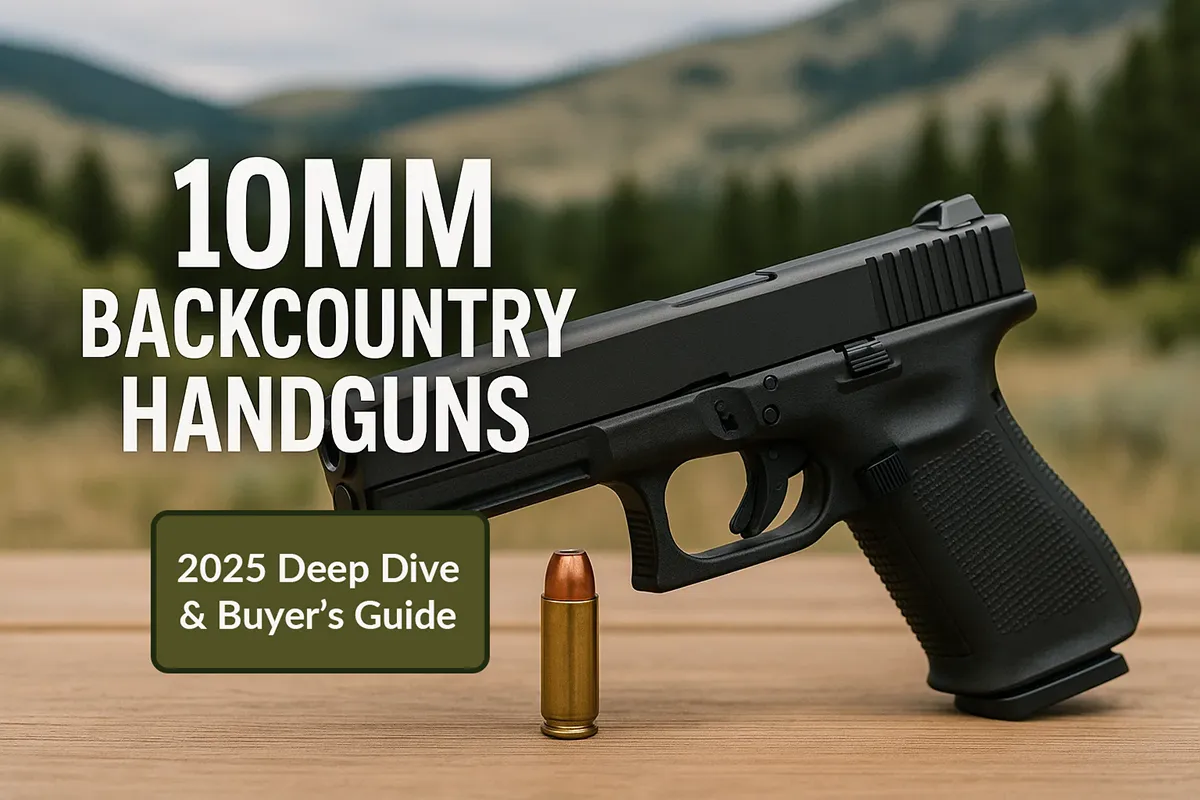
If you want one sidearm that balances power, capacity, and practical carry weight in the woods, 10mm backcountry handguns are a strong middle path between .357/.44 Magnum revolvers and lighter 9mm pistols. This guide explains who they fit, what to look for, and how to choose a trustworthy setup for trail, camp, and remote work.
On December 9, 2025, we rounded up what matters most when selecting a 10mm backcountry handgun. The appeal is simple: 10mm Auto brings stout penetration and energy in a semi-auto platform with higher capacity than magnum revolvers, yet it’s still manageable enough for regular practice. Below, we break down platform choices, features that actually help outside the square range, and a few standout models from trusted brands.
The Trend: Why 10mm Backcountry Handguns Keep Winning
Backcountry carry is about realistic readiness, not caliber arguments. 10mm Auto handguns offer:
- Capacity for confidence: More rounds on tap than most revolvers, with fast reloads using magazines.
- Manageable practice cadence: Recoil is stout but trainable, letting most shooters reach consistent hits faster than with heavy magnum revolvers.
- Broad ammo selection: From heavy hard-cast loads for penetration to controlled-expansion JHPs, you can tailor to threat and terrain.
Before you buy, think through your actual use. If your days swing between trail work, fishing, camping, and occasional solo hikes, a duty-sized 10mm semi-auto is often the most “with-me” option. If you’re in grizzly country or prefer absolute simplicity, a robust magnum revolver still makes sense—just weigh the carry cost in weight, blast, and slower follow-ups. (Bears didn’t read your caliber-war forum post, so pick what you can shoot well.)
Spec Highlights & Standouts
- Optics-ready slides: Many current 10mm pistols accept micro red dots. A clean dot can speed sighting in low light or when breathing hard on a climb.
- Accessory rails: A compact white light is useful at camp and for identifying critters after dusk. Prioritize solid mounting and proven ergonomics.
- Barrel length vs. carry bulk: Around 4.5–5.3 inches is the sweet spot for velocity and sight radius without turning the pistol into a pack-only tool.
- Grip texture and backstraps: Secure purchase matters when hands are sweaty, cold, or gloved. Favor reversible backstraps and grippy textures you can actually live with.
- Trigger characteristics: A predictable, consistent press matters more than being “match-light.” Look for clean breaks you can manage under stress.
- Mag compatibility & availability: Keep at least three reliable magazines; label them and test with your chosen carry load.
Comparisons: Popular 10mm Backcountry Handguns
Rather than chase niche variants, start with proven, widely supported models from major brands with strong parts and holster ecosystems:
- Glock “duty-sized” 10mm pistols — Known for rugged reliability, generous magazine capacity, and simple maintenance. Look for optics-ready slides and a backstrap that fits your hand. Great for users who want a no-drama tool.
- SIG Sauer modular 10mm options — Modular frames and optics-cut slides can make fit and feature updates easier over time, with good aftermarket support. Solid choice if you like tailored ergonomics.
- Smith & Wesson 10mm duty pistols — Ergonomic grips, accessory rails, and consistent triggers cater to users who value comfort and control in cold or wet conditions. Good match for all-weather carry.
Prefer a revolver? That’s valid—especially for deep-wilderness travel where simplicity rules. See Revolvers for options in .357 Magnum and .44 Magnum if you need heavier loads or prefer a hammer-and-cylinder manual of arms. For most hikers, a 10mm semi-auto remains the balance of shootability, capacity, and carry comfort.
How to Choose 10mm Backcountry Handguns (Step-by-Step)
- Define the carry pattern: Belt? Chest rig? Pack-only? Chest holsters shine when you’re seated in a raft or wearing a hip belt.
- Confirm your ammo: Zero and function-test with the exact load you plan to carry. Hard-cast loads can print differently than practice FMJ.
- Set your minimums: Optics-ready slide, accessory rail, and good night/steel sights form a practical baseline.
- Grip and trigger fit: Dry-fire and live-fire matter. Pick the frame size you can keep on target through fast strings.
- Recoil management: Try heavier recoil springs and quality mags if you run hot loads; verify reliability after any changes.
- Support gear: Bring two spare mags, a compact light, and a small cleaning kit. Tape a spare battery for your optic inside the holster harness or belt pouch.
Use Cases & Setups
Trail & hiking, black bear/boar risk: A duty-sized 10mm with a 4.5–5-inch barrel, carry dot, and 15-round magazine. Practice one-handed draws from your chosen holster and light-activation drills at dusk.
Fishing & rafting: Chest carry keeps the pistol accessible in waders and PFDs. Use a rugged, water-shedding holster with solid retention and consider a lanyard.
Backcountry work (survey, forestry, ranch): Reliability and easy maintenance top the list. Favor simple controls, tough finishes, and magazines you can purge and clean quickly.
What to Watch Next
Expect continued growth of optics-ready 10mm pistols, more factory barrels with threaded muzzles, and improved grip texturing tuned for gloved hands. If you’re still cross-shopping platforms, explore our broader semi auto pistols category for 9mm and .45 options that may fit your hands or budget better—especially if your wilderness risk profile is lower.
Brand ecosystems matter in the long run. Sticking with widely supported makers like Glock or SIG Sauer helps with holsters, magazines, and replacement parts availability when you’re gearing up for a long season.